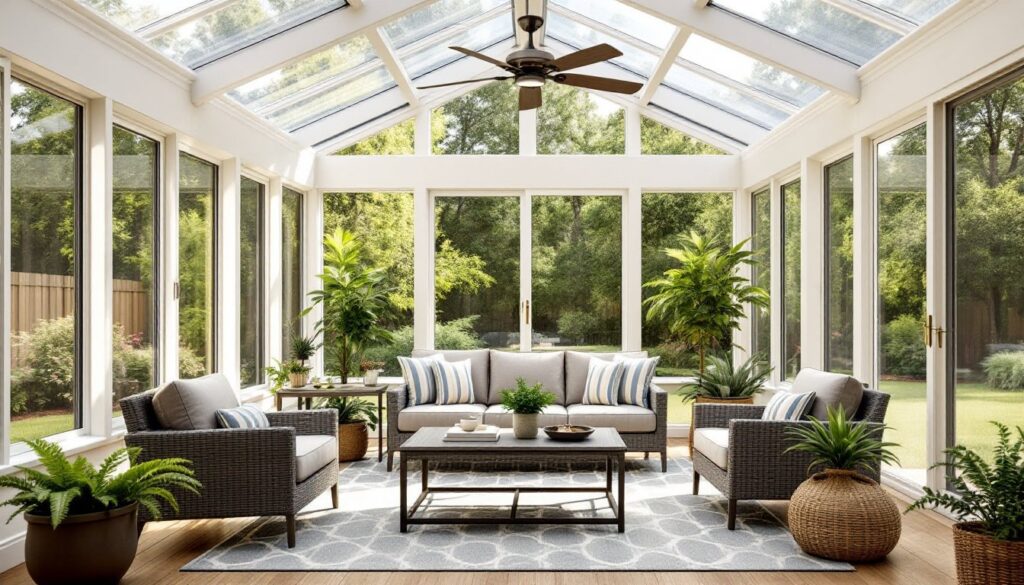

Decks offer great outdoor living space, but weather limits their use for much of the year in most climates. A deck sunroom extends that usability by enclosing all or part of your deck with walls and a roof, creating a protected space that bridges the gap between indoors and out. Whether you’re looking to add a cozy three-season room or a fully insulated year-round retreat, converting deck space into a sunroom can increase your home’s living area without a full foundation addition. This guide covers practical design options, budget-friendly approaches, and style considerations to help homeowners plan a deck sunroom that fits their needs and skill level.
Key Takeaways
- A deck sunroom extends your outdoor living season by months by enclosing your deck with walls and a roof, creating a protected space that functions as either a three-season or year-round retreat.
- Three-season deck sunroom ideas work best for moderate climates and can be built for $8,000–$15,000 in materials for a 12′ × 16′ space, with DIY installation saving thousands in labor costs.
- Four-season insulated sunrooms require structural reinforcement, energy-efficient windows, insulated walls (R-19 minimum), and HVAC integration, making them more complex but functional as true room additions.
- Match your deck sunroom’s architectural style to your home—wood framing for traditional homes, aluminum frames for contemporary designs, and multi-pane grids for Craftsman-style properties—to ensure it looks intentional rather than like an afterthought.
- Cost-saving strategies like using existing deck railings for knee walls, installing operable windows only where needed, and hiring professionals only for structural work can significantly reduce deck sunroom expenses without sacrificing quality.
- Furnish your sunroom with weather-resistant materials such as resin wicker, powder-coated aluminum, or solution-dyed acrylic fabrics, and choose appropriate flooring like porcelain tile or luxury vinyl plank to withstand temperature and moisture fluctuations.
What Is a Deck Sunroom and Why Add One?
A deck sunroom is an enclosed structure built on or attached to an existing deck, typically featuring large windows or glass panels to maximize natural light. Unlike a screened porch, it provides solid protection from wind, rain, and temperature extremes.
Homeowners add deck sunrooms for several practical reasons. They extend outdoor living season by months, provide a buffer zone that reduces heating and cooling costs for the main house, and create versatile space for dining, hobbies, or relaxation without committing to a full room addition. The existing deck structure often provides a ready foundation, though load-bearing capacity must be verified before construction.
Permit requirements vary widely by jurisdiction. Most municipalities treat enclosed sunrooms as habitable space requiring building permits, electrical permits if adding circuits, and inspections. Check local codes early, some areas have specific setback requirements or restrictions on enclosing existing decks. If your deck wasn’t originally engineered for the additional load of walls and a roof, structural reinforcement by a licensed contractor may be necessary before proceeding.
Enclosed Deck Sunroom Designs for All-Season Comfort
Three-Season Sunroom Options
Three-season sunrooms work well in moderate climates and for homeowners who primarily use the space from spring through fall. These structures typically feature single-pane or double-pane windows, minimal insulation (often R-11 to R-13 in walls), and simple climate control options like portable heaters or ceiling fans.
Construction usually involves aluminum or vinyl framing with large glass panels. Many manufacturers offer modular kit systems with pre-cut components that determined DIYers can install, though roof attachment and flashing details require careful attention to prevent leaks. Studios-grade knee walls (typically 36″ to 42″ high) topped with windows provide some privacy while maintaining views. Polycarbonate or fiberglass roof panels offer a budget alternative to glass, though they may yellow over time with UV exposure.
Ventilation matters in three-season designs. Include at least two operable windows on opposite walls for cross-breeze, and consider a ridge vent or gable vent if using a peaked roof. Without proper airflow, temperatures can spike above 100°F on sunny days even in mild weather.
Four-Season Insulated Sunrooms
Four-season sunrooms function as true room additions, engineered for year-round comfort with heating and cooling. They require insulated wall assemblies (minimum R-19), insulated roof systems (R-30 or higher), and energy-efficient windows (double or triple-pane with low-E coatings and argon fill).
Foundation and structural considerations increase significantly. The existing deck must support not only the wall and roof load but also snow loads if applicable, many residential decks aren’t rated for this. A structural engineer should evaluate capacity: reinforcement often involves adding posts, beams, or even transitioning to a frost-protected foundation with footings below frost line.
HVAC integration presents another layer of complexity. Extending the home’s central system requires ductwork modifications and may exceed equipment capacity. Mini-split heat pumps offer an efficient alternative, providing both heating and cooling without duct runs. Electrical work for dedicated circuits typically requires a licensed electrician and inspection.
Roofing choices affect both cost and comfort. Insulated aluminum roofs with thermal breaks work well but limit natural light. Glass or polycarbonate roofs with rigid foam insulation panels beneath maintain brightness while controlling heat loss, though condensation management becomes critical. Many outdoor living designs incorporate a hybrid approach: insulated solid roofing over seating areas with glass panels above walkways or less-used zones.
Sunroom Styles That Complement Your Deck
Matching architectural style prevents the sunroom from looking like an afterthought. For traditional homes with wood siding, a sunroom with wood-framed windows (cedar or treated pine) and trim details that mirror the main house creates visual continuity. Paint or stain to match existing trim.
Contemporary homes pair well with aluminum-framed sunrooms featuring clean lines and large uninterrupted glass panels. Black or bronze frames have gained popularity for modern aesthetics, though they absorb more heat than white or silver finishes, a consideration for southern exposures.
Craftsman-style homes benefit from exposed rafter tails, knee braces, and multi-pane window grids (true divided lights or high-quality simulated). Stone or brick veneer on knee walls ties into existing foundation materials, though it adds significant weight that must be supported.
Roof pitch should generally match or complement the main house. A shed roof sloping away from the house works for most applications and simplifies flashing at the connection point. Gable roofs create more interior height and traditional appearance but require more complex framing. Hip roofs offer the most finished look but demand advanced carpentry skills.
Window placement affects both views and privacy. Floor-to-ceiling glass maximizes openness but may feel exposed in suburban settings. Combining solid knee walls (36″ to 42″ high) with windows above provides privacy for seating while preserving sightlines. Garden-focused homeowners often position the sunroom to overlook landscaped areas, using the space as a transition between indoor living and outdoor gardens.
Budget-Friendly DIY Deck Sunroom Ideas
A basic three-season sunroom can be built for $8,000 to $15,000 in materials for a 12′ × 16′ space, though costs vary significantly by region and material quality. DIY installation saves $5,000 to $10,000 in labor but requires intermediate carpentry skills and 3-4 weekends of work with help.
Modular sunroom kits reduce complexity. Companies like Patio Enclosures and Four Seasons offer pre-engineered aluminum-frame systems with installation manuals. You’ll still need to verify deck structure, add footings if required, and handle flashing and weatherproofing, but framing complexity drops significantly.
For the budget-conscious, consider a hybrid approach: enclose just a portion of the deck initially. A 10′ × 12′ section costs less and tests whether you’ll actually use the space before committing to a larger enclosure. Vinyl single-hung windows from big-box stores (around $150-$250 each) work for three-season use and can be installed by confident DIYers.
Roofing represents the biggest cost variable. Corrugated polycarbonate panels run $2-$4 per square foot versus $15-$30 for insulated glass panels. Polycarbonate works well for three-season use and DIY installation, it cuts with a circular saw and screws directly to purlins, though expansion gaps must be maintained to prevent buckling.
Cost-saving strategies that don’t compromise quality:
- Use existing deck railing as a base for knee walls rather than removing it
- Install operable windows only where ventilation is needed: use fixed panels elsewhere (50% cheaper)
- Apply exterior paint or solid stain yourself rather than ordering factory-finished components
- Source windows from architectural salvage or Habitat ReStores, measure carefully and design around available sizes
- Handle demolition, painting, and trim work yourself: hire pros only for structural modifications and complex flashing
Avoid these false economies: undersized footings that settle, skipping vapor barriers in floor assemblies, using indoor-grade materials in unconditioned space, or omitting drip cap flashing above windows. These create expensive problems within a few years.
Many regional design approaches emphasize natural ventilation and shade strategies that reduce mechanical cooling needs, lowering both installation and operating costs.
Furnishing and Decorating Your Deck Sunroom
Sunroom furnishings must tolerate temperature swings and UV exposure, even in four-season designs. Three-season spaces experience wider fluctuations, furniture that works indoors may warp, fade, or develop mildew.
Seating options that hold up include all-weather wicker (resin wicker, not natural), powder-coated aluminum frames with outdoor cushions, and teak or cedar pieces. Solution-dyed acrylic fabrics (Sunbrella is the common brand, but others perform similarly) resist fading and mildew far better than cotton or polyester blends. Budget around $800-$1,500 for a conversation set (sofa, two chairs, coffee table) in durable materials.
For four-season sunrooms with consistent climate control, indoor furniture works fine, but UV protection remains critical. South- and west-facing sunrooms need window treatments: cellular shades provide insulation and light control, exterior solar shades block heat before it enters, or budget-friendly options include UV-blocking roller shades (around $30-$80 per window from Chicology or similar).
Flooring in three-season sunrooms should handle moisture. Porcelain or ceramic tile over properly sloped deck boards works well: luxury vinyl plank (LVP) rated for temperature extremes offers a warmer feel and DIY-friendly installation. Avoid laminate and solid hardwood in unconditioned spaces, they’ll cup and gap with humidity changes.
Lighting extends usability into evening hours. For DIY-friendly options, plug-in LED strip lights along ceiling perimeter provide ambient light without electrical work. Battery-powered or solar-charged pendant lights work for renters or those avoiding permits, though hardwired fixtures offer better reliability. A ceiling fan with light kit (around $150-$300) improves comfort significantly in three-season designs.
Decorative elements that enhance without cluttering:
- Potted plants that transition indoors in winter (citrus, hibiscus, ferns)
- Outdoor rugs to define seating areas and add warmth underfoot
- Wall-mounted hooks or shelving for practical storage (garden tools, cushions)
- Curtains on tension rods for flexible privacy and sun control
Keep the space functional. Sunrooms work best as usable rooms, dining areas, reading nooks, hobby spaces, not storage sheds for patio furniture. If you can’t walk through it comfortably, you won’t use it.