
A deck without greenery is just a platform. Flower boxes turn functional outdoor space into a living retreat, add privacy screening, soften hard edges, and bring color exactly where you need it. They’re one of the most forgiving DIY upgrades: no digging, no irrigation trenches, and easy to swap out seasonally. Whether you’re working with a sprawling composite deck or a modest 10×12 pressure-treated platform, the right planter setup makes a difference. Here are twelve proven ideas that work for real decks, not Pinterest fantasies.
Key Takeaways
- Deck flower boxes add color, privacy, and curb appeal without invasive installation, making them an ideal non-permanent upgrade for renters and homeowners alike.
- Railing-mounted boxes are the most practical option, requiring only adjustable brackets and no screws, while a wet 36-inch box can weigh 40–60 pounds, so spacing and railing load limits should be verified first.
- Freestanding planter boxes offer flexibility to rearrange seasonally and work best when elevated on runners to prevent water trapping and decay.
- Vertical and tiered deck flower box designs maximize growing space on small decks, though structures over 36 inches must be securely anchored to prevent toppling.
- Cedar and reclaimed wood provide natural rot resistance and character, but require staining or sealing every few years, while metal and composite options offer minimal maintenance and modern aesthetics.
- Proper drainage with holes every 4 inches and elevated positioning prevent deck staining and rot, making maintenance and longevity central to any flower box design.
Why Deck Flower Boxes Are a Game-Changer for Outdoor Living
Deck flower boxes solve problems that permanent landscaping can’t. They define space without footers or framing, create visual barriers for privacy, and let homeowners experiment with plant varieties that wouldn’t survive in-ground conditions. For renters or those planning to sell within a few years, they’re a low-commitment upgrade that packs immediate curb appeal.
From a structural standpoint, they’re non-invasive. Unlike built-in planters that require cutting into decking or blocking between joists, most flower boxes mount to existing railings or sit freestanding. That means no permit headaches and no risk of trapping moisture against the deck frame, a leading cause of rot in older wood decks.
Practically, they’re also easier to maintain than ground beds. Soil drainage is controllable, pests like voles and gophers can’t reach roots, and aging gardeners appreciate not bending to ground level. Container gardening on decks has become a staple in many home improvement projects for good reason.
The key is matching box style and mounting method to your deck’s material, railing type, and sun exposure. A box that works beautifully on a vinyl-railed composite deck may be a structural liability on a 20-year-old pressure-treated 2×4 baluster setup.
Classic Railing-Mounted Flower Boxes
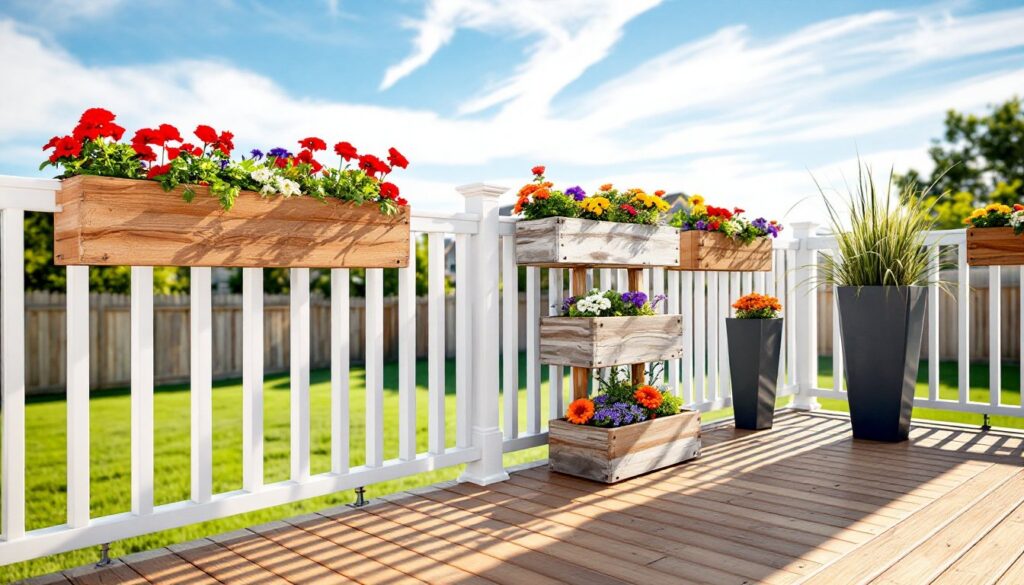
Railing-mounted boxes are the workhorse of deck planters. They maximize square footage, keep walkways clear, and work on nearly any railing profile. Most mount via adjustable brackets that clamp or hook over the top rail, no screws required, though adding a security screw is smart in high-wind areas.
Sizing and fit: Standard boxes run 24 to 36 inches long and 6 to 8 inches deep. Measure your top rail width first. A 2×6 top rail (actual dimension: 1.5″ × 5.5″) won’t support the same bracket as a composite rail with a 3.5-inch cap. If your railing has a decorative profile or built-in lighting channels, look for universal brackets with adjustable width.
Materials: Resin and PVC boxes are lightweight and weather-proof, though they can look cheap up close. Cedar and redwood offer a classic look but require annual sealing to prevent splitting. Galvanized metal or powder-coated steel planters work well on modern builds and handle freeze-thaw cycles better than wood.
Weight limits: A wet 36-inch box with soil and plants can weigh 40–60 pounds. If your railing wasn’t built to code (many older decks weren’t), adding multiple boxes may exceed the 200-pound concentrated load limit specified in IRC R301.5. Test one box first, and space them evenly.
Drainage: Every box needs drainage holes. If water pools on your deck surface, it accelerates staining and rot. Elevate boxes slightly with rubber shims or use drip trays if your deck boards are particularly porous.
For homeowners seeking easy seasonal updates, railing-mounted boxes are tough to beat.
Freestanding Planter Boxes for Deck Corners and Edges
Freestanding boxes anchor zones and add height variation without touching railings. They’re ideal for corner placements, flanking staircases, or creating a living partition between seating and dining areas.
Construction basics: Most DIY versions are built from nominal 1×8 or 1×10 cedar or pine (actual: 0.75″ × 7.25″ or 9.25″), joined with exterior screws and waterproof wood glue. A 16-inch cube is a manageable starter size. Line the interior with pond liner or heavy-duty plastic to keep soil from direct wood contact, this buys you years of extra life.
Feet and stability: Don’t let boxes sit flush on decking. Raise them on 1×2 or 2×2 runners to promote airflow and prevent water trapping. This also makes moving them easier. On windy sites or elevated decks, use L-brackets to secure large boxes to the deck frame (not just the decking boards).
Visual tricks: Varying heights creates more interest than uniform rows. Pair an 18-inch-tall box with a 24-inch version. For a unified look, match box material to deck railing or fascia, composite deck with composite boxes, wood deck with wood planters.
Load distribution: A 24-inch square box, fully loaded, can weigh over 200 pounds. That’s fine if placed over a joist or beam, but problematic in mid-span. If your deck has noticeable bounce, consult the original plans or a structural engineer before adding multiple heavy planters.
Freestanding units give flexibility that mounted boxes can’t. Rearrange them seasonally, swap plants without dismounting hardware, and take them with you if you move.
Tiered and Vertical Deck Flower Box Designs
When deck real estate is tight, go vertical. Tiered planters and vertical wall boxes multiply growing space without expanding the footprint.
Ladder-style planters: These lean against railings or exterior walls, with three to five tiers of shallow boxes. They’re great for herbs, strawberries, and trailing annuals. Most commercial versions are pine or cedar: build your own with 1×6 boards and 2×2 uprights if you want custom sizing.
Stacked box systems: Literally stacking individual boxes creates a terraced effect. Secure each tier to the one below with corner brackets, and make sure the bottom box is large enough to counterbalance the weight above it. A three-tier stack shouldn’t exceed 48 inches in height unless anchored to a post or wall.
Vertical pallet planters: Repurposed pallets have become common in seasonal garden design, though quality varies wildly. Heat-treated (HT-stamped) pallets are safe: chemically treated (MB) pallets are not. Stand the pallet upright, attach landscape fabric to the back, fill pockets with soil, and plant through the slats. Lean it at a 10–15° angle for stability and easier watering.
Living walls and pocket planters: Fabric or felt pocket systems hang from exterior walls or sturdy railings. They work well for shallow-rooted plants, lettuce, pansies, succulents, but dry out fast in full sun. Plan on daily watering in summer unless you rig drip irrigation.
Safety note: Any vertical structure over 36 inches tall should be positively anchored. A gust of wind or curious toddler can topple an unsecured tower. Use lag screws into wall studs or deck posts, not just into siding or deck boards.
DIY Cedar and Reclaimed Wood Planter Boxes
Building your own planters isn’t just a cost move, it’s the only way to get exact dimensions for odd railing profiles or specific design visions. Cedar is the go-to for outdoor projects: naturally rot-resistant, holds fasteners well, and weathers to a silver-grey patina if left unsealed.
Cut list for a basic 30-inch box:
- Two side panels: 1×8 cedar, 8 inches tall
- Two end panels: 1×8 cedar, cut to match interior width (~6.5 inches if sides overlap ends)
- Bottom: 1×6 or scrap plywood, with 1/2-inch drainage holes every 4 inches
- Corner trim (optional): 1×2 or 1×3 for a finished look
Assembly tips: Pre-drill all screw holes to prevent splitting, cedar is soft. Use stainless steel or coated deck screws (not standard zinc-plated, which will streak). Glue joints with Titebond III or similar waterproof adhesive for extra strength.
Reclaimed wood options: Barn wood, pallet lumber, and old fence pickets make characterful boxes, but check for nails, rot, and chemical treatment. Remove all hardware, sand sharp edges, and seal knots with shellac-based primer to prevent bleed-through if you’re painting.
Finish work: Bare cedar will last 5–10 years outdoors, longer if you apply a penetrating oil or semi-transparent stain every few years. Paint works, but it traps moisture if the film cracks, solid stains are a better compromise. For a modern look, char the exterior with a propane torch (shou sugi ban technique), then seal with oil.
Tool notes: A miter saw gives the cleanest cuts, but a circular saw with a clamped straightedge works fine. For drainage holes, a 1/2-inch spade bit is faster than a drill bit.
Modern Metal and Composite Deck Planters
If wood feels too rustic or high-maintenance, metal and composite planters deliver clean lines and minimal upkeep. They’re particularly well-suited to contemporary homes with composite or PVC decking.
Galvanized steel and corten: Galvanized troughs are durable and affordable, though sharp edges require filing or rubber trim. Corten steel (weathering steel) develops a stable rust patina, it’s intentional and striking, but the runoff can stain concrete and light-colored decking during the first year. Use risers and drip trays if staining is a concern.
Powder-coated aluminum: Lightweight, rust-proof, and available in dozens of colors. Quality varies, look for welded seams, not crimped. Aluminum conducts heat, so roots can cook in full sun: double-wall designs or insulated liners help.
Composite lumber planters: The same PVC-and-wood-fiber material used in decking works for planters. It won’t rot, splinter, or need staining, and it matches composite deck boards perfectly. Most composite planters are assembled with hidden fasteners and corner brackets. Some brands offer UV inhibitors to prevent fading, essential in southern climates.
Fiberglass and resin: High-quality fiberglass planters mimic stone, concrete, or wood but weigh a fraction as much. They’re pricey but nearly indestructible. Cheap resin boxes, on the other hand, become brittle after a few freeze-thaw cycles. Check product reviews before buying.
DIY metal planters: Repurposed filing cabinets, vintage washtubs, and stock tanks make affordable, industrial-style planters. Some innovative deck planter designs show how filing cabinets can be transformed into unique boxes. Drill drainage holes (use a step bit for clean holes in metal), and add a protective liner if the metal is galvanized or painted with unknown coatings.
Thermal considerations: Dark metal and composite boxes heat up fast. In zones 7 and warmer, consider light colors or reflective finishes to protect roots. Mulching the soil surface also helps.
Conclusion
Deck flower boxes aren’t just decoration, they’re functional design elements that define space, add privacy, and extend your growing season without breaking ground. Whether you mount boxes to railings, build freestanding planters from cedar, or go vertical with tiered systems, the key is matching materials and mounting methods to your deck’s structure and your maintenance tolerance. Start with one or two boxes, see what works, and expand from there.