
A bathroom renovation is one of those projects that rewards patience. Unlike a kitchen, where mistakes tend to be loud and visible, bathroom missteps often reveal themselves slowly, through a slow drip behind the vanity, a tile that shifts after six months, or a fan that never quite keeps the mirror from fogging.
Done right, though, a new bathroom quietly changes the rhythm of daily life. Mornings feel less cramped. Guests stop apologizing for needing to use the washroom. Bath time becomes something closer to the spa experience you paid for in your head. The trick is knowing which ideas actually deliver on that promise and which ones just photograph well.
Here are the renovation choices worth making, and a few worth skipping.
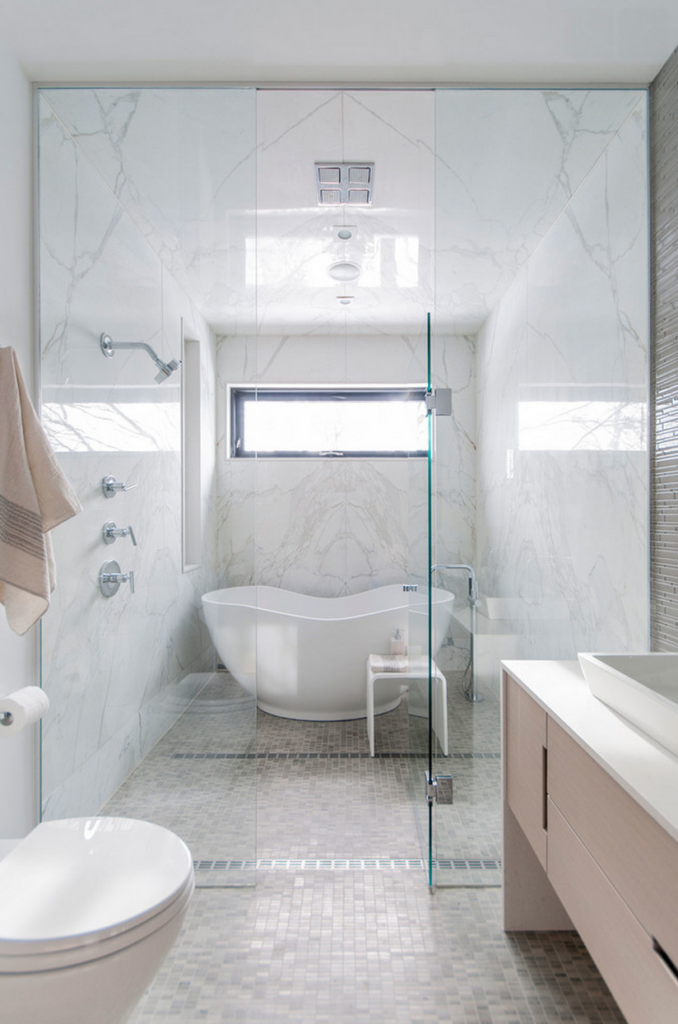
Show Image Alt text: Renovated modern bathroom featuring a freestanding soaking tub, walk-in glass shower, and floating wood vanity
Start With Ventilation, Not Aesthetics
It's tempting to lead with tile selections and faucet finishes, but the smartest bathroom renovations start with airflow. Moisture is the number one enemy of every surface in the room. Poor ventilation is how caulking turns black, how drywall swells, and how mold finds its way into places you can't see.
Before anything else, make sure the space will have a properly sized exhaust fan vented to the outside, not into the attic. Running the fan for at least twenty minutes after a shower should be a non-negotiable habit once the renovation is done. A humidity-sensing fan that runs automatically removes the human error from the equation.
Rethink the Layout, Even in a Small Space
Most bathrooms sit in the same footprint for decades because moving plumbing feels intimidating. In reality, shifting a toilet or vanity by a foot or two can completely change how the room functions. A bathroom that felt cramped for fifteen years sometimes just needed the door to swing the other way.
When you're planning the layout, think about sight lines. What's the first thing you see when the door opens? A toilet is never the best answer. A beautiful vanity or a freestanding tub makes a better welcome. Small changes in orientation often matter more than square footage.
Pick Fixtures That Save Water Without Feeling Cheap
Water efficiency has come a long way. Older low-flow showerheads had a reputation for dribbling, but modern versions deliver a strong spray while using far less water. According to the U.S. Environmental Protection Agency's WaterSense program, switching to WaterSense-labeled bathroom fixtures can save the average family thousands of gallons of water per year without sacrificing performance.
Dual-flush toilets, aerated faucets, and thermostatic shower valves all belong on the list of upgrades that pay for themselves over time. They also tend to feel more refined than the builder-grade options they replace.
Invest in Storage, Not Just Surfaces
The biggest complaint about old bathrooms isn't usually the tile. It's the lack of places to put anything. A single medicine cabinet over the sink rarely holds what a modern household needs, which is why counters end up cluttered with toothbrushes, lotions, and half-used candles.
Smart storage solutions make a bathroom feel twice as big. Recessed niches in the shower wall eliminate the need for plastic caddies. Tall linen towers tucked into a corner hold towels, toilet paper, and cleaning supplies without eating floor space. Vanity drawers with built-in outlets hide hair tools and their cords.
Choose Tile That Ages Well
Tile is the single most visible finish in any bathroom, and also the hardest to change later. Picking something trendy can lead to regret within a few years, while picking something too safe can make the room feel sterile.
The middle path is to use neutral, larger-format tile on the floor and most walls, then add personality through one accent area. A patterned niche inside the shower, a bold tile behind the vanity, or a textured feature wall behind the tub all give the room character without committing the whole space to a trend. Grout color matters too. Darker grout hides stains and makes lines less visible, while crisp white grout demands regular cleaning to stay sharp.
Light the Room in Layers
Bathroom lighting is almost always an afterthought, and it shows. A single overhead fixture casts harsh shadows on faces, which is a problem when most people use the bathroom mirror for tasks that require accuracy, like shaving or applying makeup.
The fix is layered lighting. A flush-mount ceiling fixture for general brightness, sconces or vertical LED strips on either side of the mirror for even face lighting, and a small dimmable light near the tub or toilet for late-night visits. Put as much of it as possible on dimmers. A bathroom that can shift from bright and functional in the morning to soft and relaxing at night feels like two rooms for the price of one.
Companies like Drytech often point out that lighting is where homeowners save money too aggressively, only to wish later that they had spent another few hundred dollars to get it right. Lighting is cheap to upgrade during a renovation and expensive to fix afterward.
Add One Comfort Feature You'll Actually Use
Heated floors, towel warmers, smart mirrors, steam showers. Every bathroom showroom is full of comfort features, and it's easy to either dismiss them all as gimmicks or buy every one. The better approach is to pick one upgrade that fits your life.
If you hate cold tile on winter mornings, heated floors are worth every dollar. If your family goes through towels faster than they can dry, a towel warmer solves the problem. If you have sore muscles from work or sports, a steam function in the shower earns its keep. One well-chosen comfort feature makes a renovated bathroom feel genuinely luxurious. Three or four make the room feel like a hotel lobby.
Plan for the Long Term
A bathroom renovation often lasts fifteen to twenty years. That means the choices you make should work for the version of you that will live in the house a decade from now, not just the version moving in today.
Curbless showers, wider doorways, grab bars with decorative finishes, and comfort-height toilets all sound like accessibility concerns, but they also feel great in everyday use and hold up better as families change. Aging in place isn't a distant idea. It's a design approach that makes any bathroom more usable now and far more valuable later.
The Final Check
Before signing off on the finished room, run water in every fixture for a few minutes while watching for leaks. Test the fan by holding a tissue near the intake. Open and close every drawer and door to check clearances. Turn every light on every setting. Check that the shower drains quickly and that the toilet refills without whistling or running.
Most of the problems that haunt a new bathroom are easy to catch in the first week and miserable to fix in year two. Take the time now, and the room quietly does its job for the next two decades.
A good bathroom renovation isn't about chasing the latest trend or checking every feature off a showroom list. It's about building a room that fits the way you actually live, using materials that will hold up, with enough thoughtful details to make ordinary mornings feel a little easier.