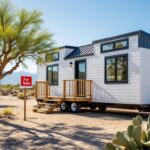

Phoenix’s desert climate and sprawling metro area have made it one of the fastest-growing markets for tiny home buyers. With year-round sunshine, affordable land options compared to coastal cities, and a booming alternative housing movement, the Valley of the Sun offers practical advantages for those downsizing or entering homeownership without a traditional mortgage. But navigating zoning codes, finding legitimate listings, and understanding what you’re actually buying requires more than browsing Instagram-worthy cabins. This guide breaks down where to find tiny homes for sale in Phoenix, what they cost, how local regulations affect placement, and the critical details that separate a smart purchase from an expensive mistake.
Key Takeaways
- Phoenix’s desert climate, affordable land, and year-round outdoor living make it an ideal location for tiny home buyers seeking low-maintenance homeownership without traditional mortgages.
- Tiny homes for sale in Phoenix range from $35,000 for entry-level units to $150,000+ for high-end, off-grid models, with mid-range options at $65,000–$95,000 offering the best balance of features and value.
- Zoning regulations vary significantly—unincorporated Maricopa County offers the most flexibility for tiny homes, while Phoenix city limits and incorporated towns restrict tiny homes on wheels as primary residences unless they meet ADU requirements with permanent foundations.
- Budget $3,000–$25,000 for utility infrastructure (electric, water, and waste disposal) and upgrade cooling systems with spray foam insulation and heat pumps to handle 110°F summer temperatures.
- Financing a tiny home typically requires RV loans, personal loans, or cash, as conventional lenders rarely finance homes titled as vehicles; resale values are most stable for park models and foundation-built structures.
- Always verify local zoning codes with planning departments and ensure any purchase meets IRC Appendix Q or RVIA standards for safety, structural integrity, and resale viability before committing.
Why Phoenix Is Perfect for Tiny Home Living
Phoenix offers several structural advantages for tiny home owners that colder or wetter climates can’t match.
Minimal weatherproofing demands. With average annual rainfall under 8 inches, builders don’t need the same level of moisture barriers, flashing complexity, or roof pitch required in regions with snow loads or heavy rain. That translates to lower construction costs and fewer long-term maintenance headaches. Vapor barriers and continuous insulation matter less when you’re not fighting freeze-thaw cycles.
Extended outdoor living season. From October through May, outdoor temps make patios, awnings, and outdoor kitchens functional extensions of interior square footage. A 200-square-foot tiny home effectively doubles in usable space when you can cook, work, or entertain outside most of the year. This is a practical offset to the reduced interior footprint.
Lower utility costs. Heating loads are minimal. A mini-split heat pump or even a small propane heater handles winter nights. Cooling does require planning, proper insulation, reflective roofing, and shade structures are non-negotiable in 110°F summers, but total energy use often stays under $100/month even in peak season.
Abundant public land and affordable private parcels. Maricopa County still has pockets of unincorporated land where building codes are less restrictive than in metro cores. Land prices in areas like Tonopah, Surprise, or Casa Grande run $5,000–$15,000 per acre, making outright land ownership feasible for buyers priced out of traditional metro real estate.
Where to Find Tiny Homes for Sale in Phoenix
Tiny Home Communities and RV Parks
Several communities in the Phoenix metro area allow tiny homes on wheels (THOWs) or park models. These are typically structured as RV parks or manufactured home communities.
Desert Trails RV Park in Tucson (about 90 minutes south) accepts certified park models and THOWs that meet RVIA or NOAH standards. Lot rent runs $400–$600/month and includes water, sewer, and trash.
Privately managed tiny home villages are emerging in Queen Creek and Apache Junction. Most require that homes meet IRC Appendix Q standards or carry RVIA certification. Expect HOA-style rules: exterior color approval, minimum square footage (often 200 sq ft), and restrictions on DIY builds that lack third-party inspection.
Facebook Marketplace, Craigslist, and dedicated platforms like Tiny Home Builders and Land Hub list both homes and land. Filter carefully, many listings are out-of-state builds that sellers want to relocate. Verify whether the unit is titled as an RV, a manufactured home, or a structure, as this affects where you can legally place it.
Private Land Sales and Custom Builders
If you’re buying land outright, targeting unincorporated Maricopa County offers the most zoning flexibility. Many parcels allow a single dwelling without a foundation, provided it meets setback requirements (usually 20 feet from property lines).
Local custom builders like Tiny Living Homes (based in Mesa) and Phoenix Tiny Homes build on-site or deliver finished units. Pricing starts around $60,000 for a bare-bones 16-foot trailer build and climbs to $120,000+ for a 24-foot model with high-end finishes and off-grid systems. Build time averages 3–6 months.
Buying pre-owned units from owners moving out of state can save 20–30%, but inspect thoroughly. Look for roof leaks (check seams and around roof vents), trailer frame rust, and whether appliances and systems (water heater, mini-split, composting toilet) are still under warranty. A pre-purchase RV inspection (typically $300–$500) is worth it for any THOW.
What to Expect: Pricing and Features in Phoenix Tiny Homes
Pricing varies widely based on size, build quality, and whether the home is DIY, production-built, or custom.
Entry-level THOWs (120–200 sq ft): $35,000–$60,000. Expect basic finishes, laminate counters, vinyl plank flooring, and minimal built-ins. Most use a 30-amp RV electrical system and standard RV appliances. These are often built on single-axle or tandem-axle trailers and are towable with a ¾-ton truck.
Mid-range models (200–300 sq ft): $65,000–$95,000. Features include hardwood or tile flooring, farmhouse sinks, full-size appliances, lofted sleeping areas with 3–4 feet of headroom, and upgraded insulation (spray foam or rigid foam panels). Electrical systems may support 50-amp service for higher-capacity AC units.
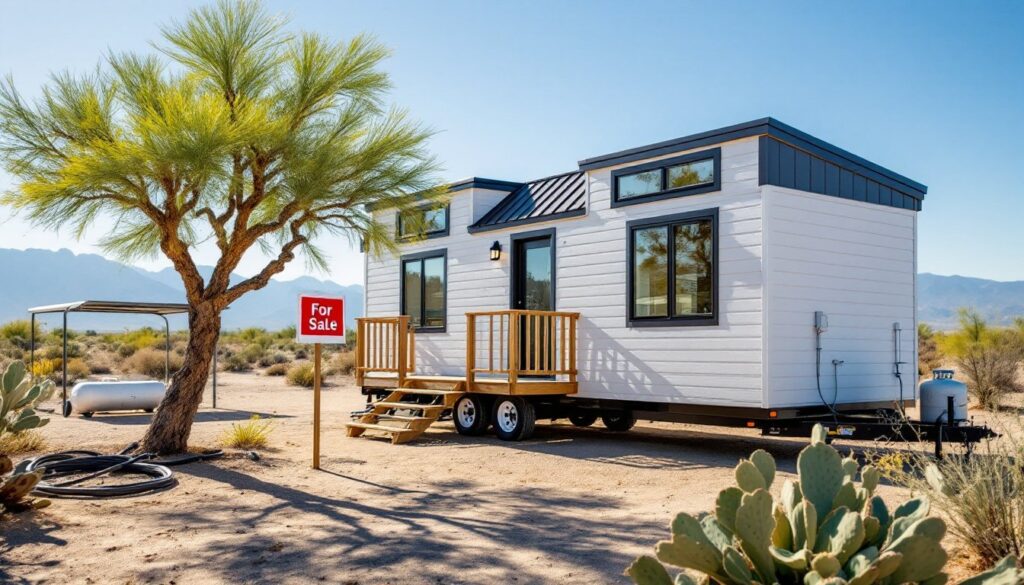
High-end and off-grid builds (300–400 sq ft): $100,000–$150,000+. Expect solar arrays (typically 1,200–2,000 watts), lithium battery banks, composting or incinerating toilets, tankless propane water heaters, and custom cabinetry. Many include outdoor decks, metal roofing, and Hardie board siding for durability in desert conditions.
Some Phoenix tiny homes incorporate design elements to handle extreme heat, like the converted grain silo tiny home in Phoenix that uses passive cooling strategies and minimal square footage to maximize efficiency. Architectural creativity can reduce cooling loads significantly.
Park models (typically 400 sq ft, the RVIA maximum) range from $50,000 to $90,000 new. These are built to RV standards but are not designed for frequent towing. They’re often placed semi-permanently in RV parks or on private land.
Phoenix Zoning Laws and Regulations for Tiny Homes
Phoenix zoning is a patchwork. What’s allowed depends on whether you’re within city limits, in an incorporated town, or in unincorporated county land.
Within Phoenix city limits: Tiny homes on wheels are generally not permitted as primary residences in residential zones. They may qualify as accessory dwelling units (ADUs) if they’re built on a permanent foundation, meet IRC building codes, and don’t exceed 50% of the primary dwelling’s square footage. This effectively rules out most THOWs unless you own a lot with an existing house.
Unincorporated Maricopa County: This is where most tiny home owners land. The county allows one dwelling per parcel, and while there’s no explicit minimum square footage, the structure must meet IRC standards if it’s a permanent dwelling. THOWs on private land exist in a gray area, if the home is titled as an RV and you’re not connecting to a septic system, enforcement is rare. But if a neighbor complains or you apply for utilities, you may be required to bring the structure up to code or relocate it.
Scottsdale, Tempe, Mesa: Each city has its own ADU ordinances. Mesa allows ADUs as small as 200 sq ft but requires permanent foundations and utility connections. Tempe’s ADU code permits detached units up to 500 sq ft. None of these cities allow THOWs as primary residences in standard residential zones.
RV parks and manufactured home communities: These are governed by park rules, not residential zoning. If the park allows it and your unit is RVIA- or NOAH-certified, you’re typically in compliance.
Before buying land or a home, call the local planning and zoning department. Ask specifically whether a THOW or a foundation-built tiny home under 400 sq ft is allowed, and whether you’ll need a building permit. In unincorporated areas, you may not need a permit for an RV, but you will for anything on a permanent foundation.
Essential Considerations Before Buying Your Phoenix Tiny Home
Utility hookups. Confirm access to water, power, and waste disposal. If buying land, budget $3,000–$10,000 to run electric from the road (more if you’re far from the grid). Wells cost $10,000–$25,000 depending on depth (Phoenix-area wells typically run 300–600 feet). Septic systems for a tiny home run $4,000–$8,000 for a basic system: composting or incinerating toilets eliminate this need but require discipline and maintenance.
Cooling systems. A standard 13,500 BTU RV air conditioner struggles in Phoenix summers if the home isn’t well-insulated. Upgrade to spray foam insulation (R-13 walls, R-30 roof minimum), reflective or white roofing, and consider a mini-split heat pump rated for the square footage. Shade structures or desert landscaping (palo verde, mesquite trees) reduce heat gain.
Towing and transportation. If you’re buying a THOW, confirm the trailer’s GVWR (gross vehicle weight rating) and whether your truck can safely tow it. A 24-foot tiny home typically weighs 10,000–14,000 lbs loaded. You’ll need a ¾-ton or 1-ton truck with a gooseneck or bumper-pull hitch rated appropriately. Professional tiny home transport runs $2–$4 per mile.
Resale and financing. Most conventional lenders won’t finance a THOW because it’s titled as a vehicle. RV loans, personal loans, or cash are the typical routes. Resale values hold reasonably well if the home is well-maintained, but expect to sell in a niche market. Park models and foundation-built tiny homes have better financing and resale options.
Insurance. RV insurance covers most THOWs ($600–$1,200/year). Foundation-built tiny homes require standard homeowners insurance, which may be harder to obtain if square footage is under 400 sq ft: some insurers classify them as “non-standard dwellings.”
If you’re also exploring retirement living options, tiny homes offer a low-maintenance, affordable entry point compared to traditional senior communities. Many retirees find the smaller footprint easier to manage as mobility decreases.
Safety and code compliance. Even if your jurisdiction doesn’t require a permit, build or buy to IRC Appendix Q or RVIA standards. This ensures structural integrity, proper egress windows (minimum 5.7 sq ft opening, 24 inches high, 20 inches wide), and safe electrical systems. DIY builds that skip these standards can be unsafe and unsellable.
Phoenix’s tiny home market is real, but it rewards buyers who do their assignments. Verify zoning, budget for land prep and utilities, and don’t assume a beautiful Instagram build meets local codes. With the right planning, a tiny home in the Valley offers an affordable, low-maintenance path to homeownership in one of the country’s most livable climates.