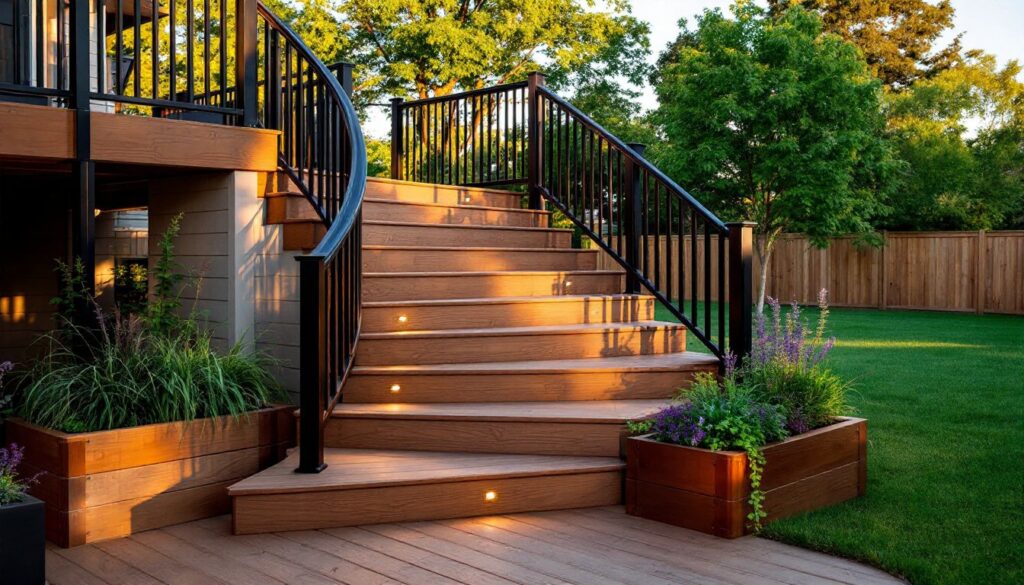

Deck steps are more than just a functional transition from backyard to deck, they set the tone for the entire outdoor space. Whether you’re building a new deck from scratch or replacing worn-out stairs, the design choices you make impact safety, flow, and curb appeal. A well-executed step design can turn a basic deck into a gathering spot that feels intentional and inviting. This guide covers classic, modern, and creative step ideas, plus material choices and critical safety considerations to help you build stairs that perform as well as they look.
Key Takeaways
- Deck steps must meet International Residential Code (IRC) standards—risers cannot exceed 7-3/4 inches and treads must be at least 10 inches deep to ensure safety and code compliance.
- Classic deck step ideas like straight-run and box steps offer simplicity and affordability, while modern options like floating treads and cantilevered steps create bold architectural statements for contemporary homes.
- Choose deck step materials based on durability and maintenance: pressure-treated lumber is cost-effective, composite decking offers low maintenance, and hardwoods like ipe provide decades of longevity.
- Handrails are required for any stairway with four or more risers, and all steps need non-slip tread surfaces and proper lighting to prevent falls and improve nighttime safety.
- Multi-level designs like L-shaped stairs, wraparound steps, and tiered garden steps add visual interest and accessibility for larger decks while requiring more careful layout and framing work.
Why Deck Steps Matter More Than You Think
Deck steps do the heavy lifting, literally. They carry foot traffic, absorb lateral forces from shifting weight, and endure freeze-thaw cycles, UV exposure, and moisture. A poorly designed staircase creates trip hazards, feels unstable underfoot, and ages badly.
Code compliance is the first consideration. The International Residential Code (IRC) sets minimum standards: risers (the vertical height between steps) can’t exceed 7-3/4 inches, and treads (the horizontal depth) must be at least 10 inches. Many local jurisdictions enforce stricter limits or require permits for decks over 30 inches high. Check before you build.
Steps also shape how people move through your yard. Wide, shallow steps invite casual flow and make a deck feel accessible. Narrow, steep stairs feel utilitarian. The right design connects indoor and outdoor living spaces without forcing awkward transitions.
Classic Deck Step Designs That Never Go Out of Style
Straight-Run Stairs
The simplest and most common design. Straight-run stairs go from point A to point B without turns or landings. They’re code-compliant, material-efficient, and easy to frame with a pair of 2×12 stringers cut with a framing square.
Straight runs work best for decks up to 4 feet high. Beyond that, you’ll need a landing to break up the climb, IRC requires one for any stairway with a vertical rise over 12 feet, though most backyard decks won’t hit that threshold.
Box Steps
Box steps are wide, open platforms that double as casual seating or plant displays. Instead of narrow stringers, the entire structure is framed like a short deck, with joists on 16-inch centers supporting the tread surface.
They work well for low decks (18 to 30 inches high) and create a generous landing zone. Frame them with pressure-treated lumber and cap with the same decking material used on the main deck for visual continuity. Many free woodworking plans offer simple box step designs suited for beginners.
Cascading Steps
Cascading steps extend the full width of the deck, creating a terraced effect. Think of them as stacked box steps with progressively wider footprints. They soften the transition between deck and yard, especially on sloped lots.
Build each tier with independent framing. Use 4×4 posts set in concrete footings to support each level. This design uses more material but pays off in visual impact and usable surface area.
Modern and Minimalist Step Ideas for Contemporary Decks
Floating Treads
Floating treads attach to a hidden steel or powder-coated aluminum frame, creating the illusion that each step hovers. The visual effect is clean and open, ideal for modern homes with lots of glass and horizontal lines.
This design requires precision. Treads must be anchored to a structural steel stringer welded or bolted to the deck frame and a concrete footer below. This isn’t a weekend DIY, hire a metal fabricator or structural engineer to spec the frame. Use 2-inch-thick hardwood treads or composite decking with a reinforced core to prevent flex.
Cantilevered Steps
Cantilevered steps extend from a single side stringer or central spine, with no visible support on the opposite end. The effect is bold but demands engineering. Each tread must resist bending and twisting under live load.
Steel is the go-to material for the central support. Attach treads with concealed fasteners or through-bolts countersunk and plugged. Expect to pull a permit, most jurisdictions treat cantilevered stairs as engineered structures.
Metal and Wood Combos
Pair pressure-treated or cedar treads with powder-coated steel stringers for a hybrid look that’s durable and low-maintenance. The metal handles structural loads while wood adds warmth. This combo works especially well with composite or PVC decking, which can look sterile without natural contrast.
Creative Multi-Level and Wraparound Step Designs
L-Shaped Stairs with Landings
L-shaped stairs turn 90 degrees at a mid-level landing, breaking up a long climb and adding architectural interest. They’re required by code for tall decks but work beautifully even on shorter builds.
Frame the landing like a mini deck, with joists supported by posts set in concrete footings. The landing must be at least 36 inches square to meet code. This design eats up more square footage but makes a deck feel grander and more intentional.
Wraparound Steps
Wraparound steps curve along two or more sides of the deck, opening access from multiple angles. They’re ideal for large decks that face a pool, fire pit, or open lawn.
Framing is labor-intensive. Each section needs independent stringers, and corners require careful layout to maintain consistent riser height. Use a story pole (a straight board marked with riser increments) to transfer measurements accurately. For detailed step-by-step builds, platforms like Instructables host user-submitted tutorials with photos and cut lists.
Tiered Garden Steps
Integrate planters or raised garden beds into the step structure. Build box steps with extra depth, then frame planter boxes into the riser faces using rot-resistant cedar or composite trim.
Line planters with landscape fabric and ensure drainage holes to prevent water from pooling against the deck frame. This design works best with low-maintenance perennials or ornamental grasses that don’t require frequent replanting.
Materials That Make a Difference: Choosing the Right Option
Pressure-Treated Lumber
The workhorse of outdoor construction. Ground-contact rated PT lumber (stamped 0.60 retention or higher) resists rot and insects. Use it for stringers, joists, and structural framing.
Treads can be PT 2x6s or 5/4 decking. Expect some cupping and checking as the wood dries. Let PT lumber acclimate for a few weeks before installation, and predrill fastener holes to prevent splits.
Composite Decking
Composite treads offer low maintenance and consistent color. Most brands resist fading, splintering, and mold. Check the manufacturer’s span rating, some composites require closer joist spacing (12 inches on center instead of 16) to prevent flex on stair treads.
Pair composite treads with hidden fasteners for a clean look. Brands like Trex and TimberTech offer stair nosing and fascia trim for a finished edge.
Hardwood and Cedar
Ipe, cumaru, and tigerwood are dense, naturally rot-resistant hardwoods that age to a silver-gray patina. They’re expensive but outlast PT lumber by decades. Predrill every fastener hole, hardwoods will split otherwise.
Cedar is lighter and easier to work with but less durable than tropical hardwoods. It’s a good middle ground for homeowners who want natural wood without the cost of ipe. Seal cedar every 2-3 years to maintain color.
Stone and Pavers
Stone treads (bluestone, granite, or limestone) pair well with masonry or contemporary homes. Set them on a compacted gravel base with a 2-inch sand bed, or mortar them to a concrete footer.
Pavers are easier to DIY. Use polymeric sand in the joints to lock them in place and resist weed growth. For layout tips and tool recommendations, check resources on woodworking and outdoor building sites that cover both carpentry and hardscaping techniques.
Safety and Lighting Considerations for Deck Steps
Handrails and Guardrails
IRC requires a handrail for any stairway with four or more risers. The rail must be 34 to 38 inches above the nosing of the treads, with graspable diameter (1-1/4 to 2 inches for circular rails).
Guardrails (the vertical barriers along the deck edge) are required if the deck surface is more than 30 inches above grade. Balusters must be spaced so a 4-inch sphere can’t pass through.
Non-Slip Tread Surfaces
Wet wood and composite treads get slippery. Add traction with adhesive grip tape, textured stair nosing, or grooved tread surfaces. Some composite brands offer embossed or wire-brushed finishes that improve grip without looking industrial.
Avoid painting treads, it hides the grain and wears unevenly. If you stain, use a semi-transparent penetrating stain that won’t create a slick film.
Step Lighting
Low-voltage LED step lights improve safety and ambiance. Recess them into riser faces or mount them under the nosing of each tread. Most kits run on a 12-volt transformer and use less than 2 watts per fixture.
Run wiring during framing. Drill holes through stringers and staple cable to the underside of treads. Use weatherproof connectors rated for wet locations. Solar step lights are an option for low-traffic stairs but won’t be as reliable or bright as hardwired LEDs.
PPE and Tools
Always wear safety glasses, hearing protection, and work gloves when cutting lumber or driving fasteners. A circular saw or miter saw handles most cuts: a framing square and speed square ensure accurate stringer layout. A pneumatic framing nailer speeds up assembly, but a cordless drill and structural screws work fine for DIYers.
Conclusion
Deck steps shape how a backyard functions and feels. Whether you’re building a simple straight run or a multi-level wraparound staircase, the fundamentals remain the same: meet code, choose durable materials, and don’t skip the prep work. Measure twice, check local regulations, and invest in proper footings and fasteners. The result is a staircase that’s safe, solid, and worth the effort.