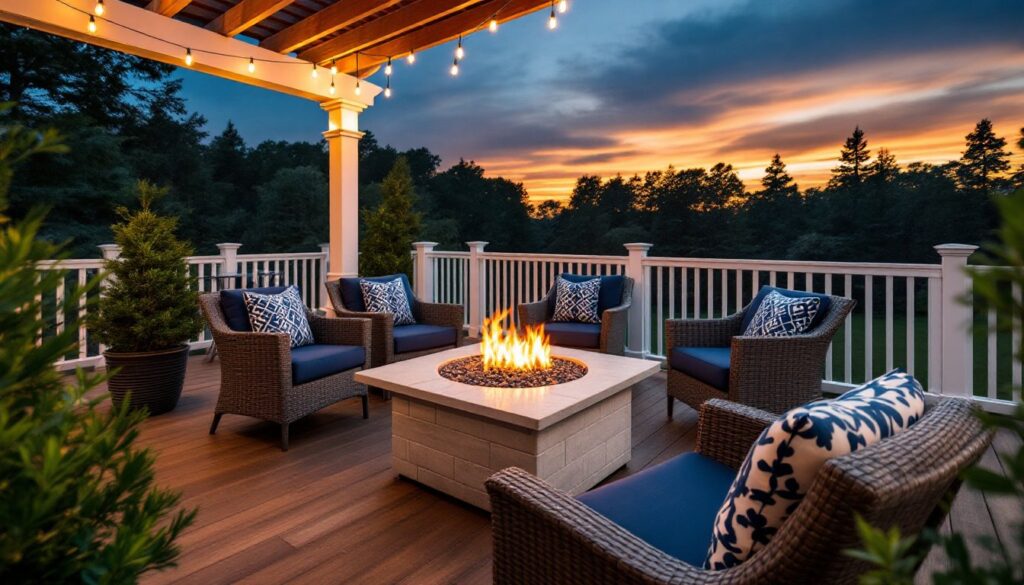

Adding a fire pit to a deck extends usable outdoor space well into fall evenings and creates a natural gathering spot for family and friends. But unlike fire pits installed in yards or patios, deck installations demand careful planning around safety, materials, and local codes. Homeowners need to balance aesthetics with practical concerns, combustible decking materials, clearances, and fuel types all play a role in whether a project is DIY-friendly or requires professional consultation. This guide walks through fire pit options suited to deck environments, critical safety measures, design placement strategies, and materials that deliver both function and curb appeal.
Key Takeaways
- Deck fire pit ideas must avoid wood-burning models; instead, choose gas, electric, or gel fuel options that meet building codes and won’t damage combustible decking.
- Install non-combustible heat barriers like fiber-cement board or steel heat shields and maintain a minimum 10-foot clearance radius from railings, structures, and furniture to ensure fire safety.
- Propane fire pits are portable and require no hardwired installation, while natural gas models offer lower operating costs but demand licensed installation and local permits.
- Electric fire pits provide the safest alternative with no open flame or emissions, though they offer modest heat output and work best for ambiance rather than warmth.
- Verify your deck’s load capacity before installing heavy fire pit tables or stone surrounds, as standard residential decks are engineered for only 40 to 50 pounds per square foot.
- Choose design materials that complement your home’s style—steel for modern looks, stone veneers for rustic appeal—while avoiding composite trim and furniture that warps under heat exposure.
Choosing the Right Fire Pit Type for Your Deck
Not all fire pits are deck-safe. Wood-burning models generate high heat, flying sparks, and ash that can scorch or ignite composite and wood decking. Most building codes and manufacturer warranties explicitly prohibit open wood fires on combustible surfaces. That narrows viable options to gas, electric, and gel fuel units designed for controlled, low-emission operation.
Propane and Natural Gas Fire Pits
Propane fire pits connect to standard 20-pound tanks (the kind used for grills) and deliver adjustable flame control via a dial or knob. They’re portable, require no hardwired gas line, and produce roughly 30,000 to 60,000 BTUs depending on burner size. Swap tanks as needed: a typical tank lasts 8 to 10 hours at medium output.
Natural gas models tie into a home’s existing gas line, which means calling a licensed plumber or gas fitter for installation. Upfront cost runs higher due to labor and pipe routing, but there’s no tank swapping. Natural gas burns cleaner than propane and costs less per BTU in most regions. Check local codes, many jurisdictions require permits for gas-line extensions, and the International Residential Code (IRC) mandates shutoff valves within 6 feet of the appliance.
Both fuel types use lava rock, fire glass, or ceramic logs to diffuse flame and radiate heat. Fire glass (tempered glass pebbles) reflects light for a modern look and doesn’t degrade like lava rock, which can crumble after repeated thermal cycling.
Electric and Gel Fuel Options
Electric fire pits plug into standard 120-volt outlets and use LED flame effects with embedded heating elements (typically 1,500 watts, comparable to a space heater). They’re the safest deck option, no open flame, no fuel storage, no emissions. Heat output is modest, best for ambiance rather than warming a large group on a cold night. They work well on covered or screened porches where ventilation for combustion isn’t an issue.
Gel fuel canisters burn isopropyl alcohol, producing a real flame without smoke or ash. Each canister lasts about 2.5 to 3 hours and costs roughly $3 to $5. Heat output is low (around 3,000 BTUs per canister), so these units are primarily decorative. Gel fuel is spill-safe when cool but flammable when lit, so handle canisters with care and never refill a hot burner.
Essential Safety Considerations for Deck Fire Pits
Clearances are non-negotiable. The IRC and National Fire Protection Association (NFPA) guidelines recommend a minimum 10-foot radius clear of combustibles, railings, overhead structures, furniture, and plants. Covered decks or pergolas require even greater clearance: consult local fire codes before installation.
Heat shields and fire-resistant pads are mandatory on wood or composite decking. Use a non-combustible base such as a 1/2-inch fiber-cement board (like HardieBacker), a steel or aluminum heat shield, or a fire-rated deck pad rated to withstand at least 300°F. These barriers prevent radiant heat from warping or igniting deck boards. Some manufacturers sell integrated fire pit tables with built-in shields: verify the product is UL-listed or CSA-certified for deck use.
Ventilation matters for gas and gel units. Even “smokeless” fuels produce carbon monoxide. Never use any fire pit under a fully enclosed space without adequate airflow. Screened porches with open sides are generally fine: fully enclosed sunrooms are not.
Permit requirements vary widely. Many municipalities classify deck fire pits as permanent fixtures requiring a building or mechanical permit, especially for natural gas lines. Propane and electric models may fall under portable appliance codes, but it’s the homeowner’s responsibility to verify. A quick call to the local building department or fire marshal can save headaches later.
Personal protective equipment: Keep a Class B fire extinguisher (rated for flammable liquids and gases) within arm’s reach. If children or pets frequent the deck, consider models with automatic shutoffs or cool-touch glass surrounds.
Creative Fire Pit Placement and Design Ideas
Placement drives both safety and social flow. Corner installations maximize usable deck space and create a cozy nook: L-shaped built-in seating wraps two sides, leaving the third open for entry. Centered layouts work on larger decks (at least 16×20 feet) where a fire pit becomes a focal point with seating arranged in a full circle.
Many popular outdoor entertaining ideas emphasize multi-zone decks, cooking, dining, and lounging areas defined by furniture arrangement and flooring transitions. A fire pit anchors the lounge zone: pair it with low-profile Adirondack chairs or sectional seating 3 to 4 feet from the pit’s edge to respect clearances while keeping conversation intimate.
Sunken or recessed fire pits require cutting into the deck frame and reinforcing joists, a job best left to a structural carpenter or deck builder. The payoff is a lower profile that reduces visual bulk and improves sight lines. This approach often pairs with fire-rated metal inserts or gas-ring burners set into custom stone or tile surrounds.
Fire pit tables double as coffee or dining tables when the burner is covered. Look for models with tempered glass wind guards that protect flames from gusts while keeping hands and drinks safe. These hybrid designs suit smaller decks where every square foot counts.
Lighting integration enhances nighttime ambiance. Low-voltage LED strips under cap rails or step risers provide path lighting without glare. Avoid placing fixtures directly above the fire pit: heat can damage wiring and lenses.
Materials and Styles That Complement Your Deck
Fire pit aesthetics should echo the deck’s material palette and the home’s architecture. Steel fire bowls with powder-coated or rust-finish patinas suit modern or industrial exteriors. Cast concrete or GFRC (glass-fiber-reinforced concrete) fire tables mimic the heft of stone at a fraction of the weight, important when deck load ratings are a concern. Standard residential decks are engineered for 40 to 50 pounds per square foot live load: a 200-pound fire pit plus seating and occupants can approach or exceed that threshold, especially on cantilevered sections. Verify load capacity with the original deck plans or a structural engineer if adding heavy units.
Slate, granite, or porcelain tile surrounds resist heat and clean easily. Avoid composite or vinyl trim near the pit: both soften or melt under sustained heat. For decks built with pressure-treated lumber, maintain 12-inch clearances even with heat shields: treated wood contains moisture and resins that can ignite if exposed to prolonged radiant heat.
Natural stone veneers, stacked ledgestone, tumbled travertine, or bluestone caps, create a rustic look that pairs well with garden design ideas emphasizing native plantings and organic textures. Mortar-set stone requires a solid base: if retrofitting onto an existing deck, install a steel frame or reinforced fiber-cement board to support the weight and provide a stable substrate.
Wicker or resin wicker furniture complements coastal or cottage-style decks. Choose pieces with aluminum frames rather than wood: aluminum won’t warp from heat exposure. Cushions should be solution-dyed acrylic (like Sunbrella), which resists fading and mildew.
For homeowners inspired by porch and outdoor living ideas, farmhouse or traditional styles pair well with cast-iron or bronze fire bowls and Adirondack seating stained to match deck rails. Incorporate vintage or salvaged accents, galvanized buckets for firewood storage (even if using gas), lanterns, or enamelware, to layer in character without clutter.
Conclusion
A well-planned deck fire pit balances safety, code compliance, and design intent. Stick to gas or electric fuel sources, install proper heat barriers, respect clearances, and choose materials that won’t warp or ignite under heat. The result is a functional, inviting outdoor room that extends the seasons and adds measurable value to a home.