
Corners are tricky real estate in any room. They gather dust, collect forgotten plants, and rarely earn their keep. But here’s the thing: placing a TV in a corner can actually solve layout headaches, especially in smaller living rooms, awkward floor plans, or open-concept spaces where furniture placement gets complicated. A well-designed corner TV wall doesn’t just tuck the screen away, it turns a dead zone into a visual anchor. The key is treating that corner like the focal point it’s about to become, with thoughtful design choices that balance function, storage, and style without overwhelming the space.
Key Takeaways
- Corner TV walls transform awkward dead zones into functional focal points while freeing up valuable wall space for other design elements and simplifying cable management.
- A 50- to 55-inch screen typically works best for most residential corners without overpowering the space, as larger TVs can make the room feel cramped.
- Floating shelves and built-in units should anchor into wall studs with proper ventilation clearance of at least 3 inches around electronics to prevent overheating.
- Accent lighting through LED strips, recessed cans, or wall sconces—paired with dimmer switches—reduces eye strain and creates visual depth for corner TV walls.
- Dark accent wall colors (charcoal, navy, deep green) and stone veneer or shiplap feature walls make corner TV setups feel intentional while minimizing glare.
- Corner TV cabinets must accommodate component depth and include ventilation grilles or open backs; proper cable management with drilled holes and Velcro ties keeps wiring organized.
Why Corner TV Walls Are Perfect for Modern Homes
Corner TV placement works especially well in rooms where wall space is limited or interrupted by windows, doors, or architectural features. Instead of fighting the layout, homeowners can use the corner to create sightlines that work from multiple seating areas.
This setup shines in open floor plans where the living room flows into a dining area or kitchen. Angling the TV into the corner allows viewers to watch from the sofa while keeping the screen visible from adjacent spaces without dominating the entire room.
From a practical standpoint, corner installations often free up valuable wall space for other uses, bookshelves, art, or windows. They also simplify cable management since corners naturally hide wiring runs along baseboards or inside cabinetry.
One honest heads-up: corner TV walls require careful measurement. Screen size matters more here than with a centered wall mount. A 65-inch TV in a tight corner can feel cramped and make the room look smaller. A 50- to 55-inch screen usually hits the sweet spot for most residential corners without overpowering the space.
Floating Shelves and Built-In Corner TV Units
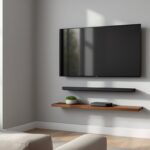
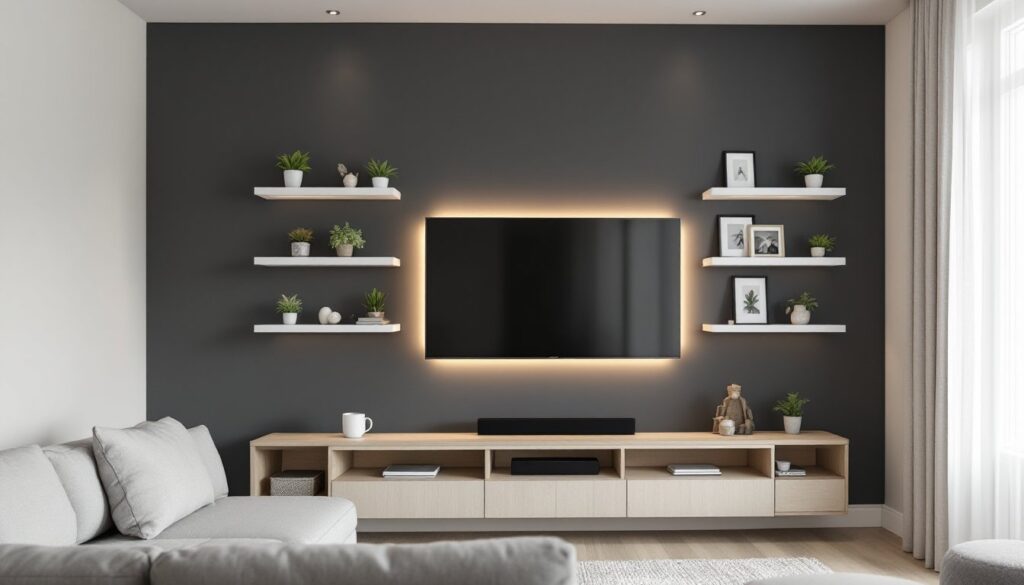
Floating shelves flanking a corner-mounted TV create clean lines and offer display space without eating into floor area. The trick is anchoring those shelves into wall studs, not drywall anchors, especially if they’ll hold anything heavier than a picture frame. Use a stud finder, mark 16-inch on-center spacing (standard in most homes), and secure shelf brackets with 3-inch wood screws.
For a cohesive look, run shelves at consistent heights on both walls forming the corner, creating an L-shaped gallery. Keep the TV at eye level when seated (usually 42 to 48 inches from the floor to the center of the screen). Shelves above and below the mount add symmetry.
Built-in corner units take more effort but deliver custom storage and a finished appearance. These typically involve framing a niche with 2×4 lumber, sheathing it with ½-inch plywood or MDF, and finishing with paint or veneer. If going this route, plan for ventilation, electronics need airflow. Leave at least 3 inches of clearance on all sides of components.
An alternative that skips the carpentry: modular corner TV stands with integrated shelving. Look for units with cable management cutouts and adjustable shelves to accommodate different component heights. Just confirm the stand’s weight capacity matches your TV and gear, most quality units support up to 100 pounds, but verify before buying.
Whether floating or built-in, paint the shelving and wall in a contrasting color to make the TV feel intentional rather than awkwardly placed. Many designers recommend darker tones in the corner to create depth.
Corner TV Walls with Accent Lighting
LED strip lighting behind the TV (bias lighting) reduces eye strain and adds a floating effect. These strips come in 12V or 24V versions: the latter offers more consistent brightness over longer runs. Stick with color temperature around 6500K to match typical TV white balance, or go with RGB strips if adjustable mood lighting appeals.
Installation is straightforward: clean the back of the TV or wall-mount bracket with isopropyl alcohol, peel the adhesive backing, and press the strip along the edges. Route the power cable down to an outlet, ideally one controlled by a smart plug or dimmer switch for easy on/off.
Recessed lighting above or beside the corner adds drama. If the ceiling is accessible from above (attic or crawl space), 4-inch LED recessed cans installed in the corner can wash light down the walls. This is electrical work that may require a permit depending on local codes, and running new circuits should be handled by a licensed electrician unless the homeowner is confident working with 120V wiring and NEC standards.
For a simpler option, track lighting or adjustable wall sconces let homeowners direct light without cutting into ceilings. Position fixtures to avoid glare on the screen, angle them toward the walls, not the TV.
Dimmer switches are non-negotiable here. Bright overhead lights during movie time kill the vibe, and dimmable LEDs give flexibility for different activities. Install a single-pole dimmer rated for LED loads to avoid flickering, which happens when using old incandescent dimmers with LED bulbs.
Stone and Wood Feature Walls for Corner TVs
A stone veneer or reclaimed wood accent wall turns a corner TV setup into a legit focal point. Both materials add texture and warmth, but they handle differently.
Stone veneer (manufactured or natural thin-cut stone) typically installs over a scratch coat of mortar or construction adhesive. For interior corner applications, lightweight manufactured stone is easier to work with and doesn’t require a structural ledge. Popular choices for home design projects include stacked slate, ledgestone, or river rock panels. Budget around $8 to $15 per square foot for materials, not including mortar and grout.
Cut stone with a wet tile saw or angle grinder with a diamond blade, wear safety goggles, gloves, and a dust mask (preferably N95). Corners need miter cuts or corner pieces to wrap the angle cleanly. Seal the finished stone with a breathable masonry sealer to resist staining.
Reclaimed wood or shiplap offers a lighter, more rustic vibe. Source wood from salvage yards or buy new shiplap in 1×6 or 1×8 nominal sizes (actual dimensions are closer to ¾” x 5½” or ¾” x 7¼”). Install over a level plywood backer if the drywall isn’t perfectly flat, using a pneumatic brad nailer with 18-gauge nails or construction adhesive.
For corners, miter the boards at 45 degrees where the two walls meet, or use corner trim to cover the seam. Sand and finish with polyurethane or tung oil to protect the wood and enhance the grain.
Both materials add weight, so confirm the wall can handle it. For stone veneer on drywall, make sure fasteners hit studs. If covering a large area, consult the International Residential Code (IRC) or a structural engineer to verify load limits, especially on older homes.
Corner TV Cabinet and Storage Solutions
Corner TV cabinets serve double duty: they support the screen and stash remotes, game consoles, DVDs, and all the other gear that clutters a media setup. Off-the-shelf corner cabinets range from $150 to $800 depending on materials and size, with solid wood and tempered glass doors at the higher end.
When shopping, check the cabinet’s internal dimensions. A common mistake is buying based on TV size without measuring component depth. Cable boxes, soundbars, and gaming consoles need space, and most require ventilation. Look for cabinets with open backs or ventilation grilles to prevent overheating.
For a custom approach, build a corner cabinet from ¾-inch plywood with pocket-hole joinery (a Kreg Jig simplifies this). Cut triangular or trapezoidal shelves to fit the corner footprint, edge-band exposed plywood edges with iron-on veneer tape, and finish with paint or stain. Include adjustable shelf pins to accommodate different component heights.
Doors keep clutter hidden but require careful hinge selection. Soft-close European hinges are worth the extra cost, they prevent slamming and last longer than basic butt hinges. For glass doors, use tempered glass (standard plate glass is a safety hazard if broken) and confirm hinge ratings support the weight.
Cable management inside the cabinet matters. Drill 1½-inch holes in the back corners of shelves for cable runs, and use Velcro cable ties to bundle and organize wires. A power strip mounted inside the cabinet keeps outlets accessible without snaking extension cords across the floor.
If building feels like overkill, plenty of small space solutions exist in modular furniture lines that adapt to corner layouts without custom work.
Paint and Wallpaper Techniques to Highlight Your Corner TV
A bold paint color or wallpaper pattern behind the TV draws the eye and defines the corner as intentional space. The goal is contrast without distraction, dark, muted tones work better than bright, busy patterns that compete with the screen.
Dark accent walls (charcoal, navy, deep green) make the TV “disappear” when off and reduce glare when on. Use low-VOC interior paint in a matte or eggshell finish to minimize reflections. One gallon typically covers 350 to 400 square feet with two coats, so a corner accent usually needs less than a quart.
Prep is non-negotiable: clean the walls, patch holes with spackling compound, sand smooth with 120-grit sandpaper, and prime if painting over a drastically different color or fresh drywall. Skip the prep, and the finish will show every flaw.
For corners with two walls meeting, decide whether to paint both walls or just one. Painting both creates a wraparound effect: painting one creates asymmetry that can look modern or unfinished depending on execution. Use painter’s tape rated for delicate surfaces (blue or green tape) along the ceiling, baseboards, and adjacent wall, and remove it while the paint is still slightly wet to avoid peeling.
Wallpaper offers texture and pattern but demands precision in corners. Peel-and-stick removable wallpaper is the DIY-friendly option, no paste, easier to reposition, and less permanent. Popular choices for media walls include faux brick, geometric patterns, or subtle textures like linen or grasscloth.
When wallpapering an inside corner, never wrap a full sheet around the corner, it’ll buckle. Instead, cut the paper to extend ½ inch past the corner, smooth it into place, then overlap the next sheet from the adjacent wall. Use a seam roller to press edges flat and a utility knife to trim excess along baseboards and ceilings.
Both paint and wallpaper benefit from decor inspiration galleries when choosing colors and patterns. Test samples in the actual corner with the TV in place, lighting changes how colors read throughout the day.
Conclusion
Turning a corner into a functional, stylish TV wall takes a bit of planning and honest assessment of skill level. Whether it’s floating shelves anchored into studs, a stone veneer feature wall, or a custom cabinet with proper ventilation, the difference between a DIY win and a weekend regret usually comes down to prep work and knowing when to call in help. Measure twice, don’t skip the stud finder, and treat that corner like the focal point it’s about to become.