
A black and white patio isn’t just visually striking, it’s one of the most versatile design foundations for outdoor living. This high-contrast palette works across architectural styles, from mid-century modern to traditional farmhouse, and provides a clean backdrop that lets landscaping, furniture, and seasonal decor take center stage. Unlike trend-driven color schemes that date quickly, monochrome outdoor spaces remain relevant year after year. Whether working with concrete pavers, porcelain tile, painted surfaces, or a combination of materials, homeowners can create patterns and textures that range from bold geometric statements to subtle tonal variations. The following ideas cover flooring, furniture, pattern options, and finishing details to help execute a cohesive black and white patio design.
Key Takeaways
- Black and white patio ideas provide timeless visual impact and design flexibility across architectural styles without dating quickly like trend-driven color schemes.
- Checkerboard flooring patterns work with concrete pavers ($1–$3 per sq ft), porcelain tile, or painted concrete stain, with costs ranging from under $100 for DIY painting to professional installations.
- Furniture and decor—including matte black aluminum frames, white outdoor fabrics, geometric rugs, and monochrome planters—should be layered with textures to prevent a flat appearance.
- Black and white tile options range from encaustic cement designs and hex tiles to large-format porcelain slabs and herringbone patterns, with slip ratings (DCOF 0.42+) critical for safety.
- Striped and diagonal patterns direct the eye and reshape perception of patio dimensions, while mixing materials like smooth tile with textured stone or wood accents adds depth to your black and white patio.
- Proper drainage, leveling, transition strips between materials, and climate-appropriate material selection ensure durability and safety in monochrome outdoor living spaces.
Why Choose a Black and White Color Scheme for Your Patio?
Black and white delivers maximum visual impact with minimal materials. This palette simplifies decision-making during the design phase, homeowners aren’t juggling multiple paint samples or trying to match six different cushion fabrics. The stark contrast defines zones clearly, which is especially useful on larger patios where dining, seating, and cooking areas need visual separation.
From a practical standpoint, both colors hide different types of wear. White surfaces show dust and pollen less than darker tones in dry climates, while black conceals water spots and organic debris in wetter regions. Dark pavers and tiles also absorb heat, extending comfortable outdoor use into cooler evenings, though they can become uncomfortably hot underfoot in direct summer sun. Lighter surfaces reflect heat but may require more frequent cleaning to maintain their appearance.
This color scheme pairs well with any accent color. Homeowners can rotate seasonal decor, coral pillows in summer, olive planters in fall, navy throws in winter, without repainting or replacing permanent fixtures. The neutrality also increases resale appeal, as fewer buyers are put off by black and white than by committed color palettes like turquoise or yellow.
Classic Checkerboard Patio Flooring Patterns
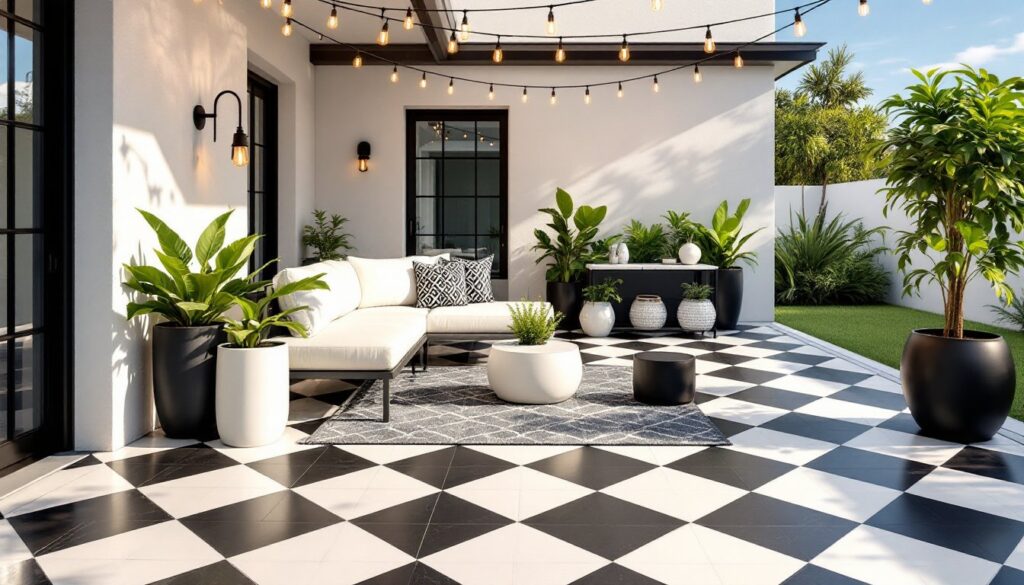
Checkerboard layouts remain one of the most recognizable monochrome patterns, and they’re achievable with multiple materials. 12×12-inch concrete pavers are the most budget-friendly option, typically running $1–$3 per square foot for basic units. Lay them on a compacted gravel base with a 1-inch sand setting bed, alternating black and white pavers in a grid. Use polymeric sand in the joints to lock the pattern and resist weed growth.
Porcelain tile offers a cleaner, more refined look. Choose through-body porcelain rather than glazed options for outdoor use, the color runs through the entire tile thickness, so chips are less visible. Standard tile sizes for checkerboard patios are 12×12, 16×16, or 24×24 inches. Larger formats reduce grout lines and speed installation. Set tiles in thin-set mortar over a solid concrete slab, and use a crack-isolation membrane if the slab is older or prone to movement. Grout with a sanded, polymer-modified product rated for exterior use.
For a DIY-friendly alternative, homeowners can paint an existing concrete slab. Use concrete stain rather than latex paint for better penetration and fade resistance. Mask off squares with painter’s tape, applying a dark charcoal or true black stain in alternating blocks. This method costs under $100 for a typical 10×12-foot patio but requires reapplication every 2–3 years depending on sun exposure and foot traffic.
Checkerboard patterns work best on level surfaces. If the patio has a slope for drainage, the grid can emphasize unevenness, making imperfections more obvious. In that case, consider a running bond or offset pattern instead.
Modern Monochrome Furniture and Decor Choices
Furniture selection determines whether a black and white patio leans traditional or contemporary. Powder-coated aluminum frames in matte black resist rust and support clean-lined silhouettes. Pair with white outdoor fabric, solution-dyed acrylic like Sunbrella holds color and resists UV degradation better than polyester blends. For a softer look, choose natural materials like teak or eucalyptus left to weather to a silvery gray, then add black and white striped cushions.
Outdoor rugs anchor seating areas and add pattern at a lower cost than custom tile. Polypropylene rugs resist mold and dry quickly after rain. Look for geometric prints, Greek key, Moroccan trellis, or bold stripes, in black and white. Standard sizes like 5×7 or 8×10 feet fit most conversation areas.
Lighting extends patio use after dark. Black metal lanterns with LED candles provide ambient light without wiring. For permanent installations, consider matte black sconces flanking a doorway or string lights with black cabling overhead. Many design enthusiasts reference ideas from outdoor living guides when planning lighting layouts and furniture arrangements.
Planters in glossy black ceramic or matte white fiberglass create focal points. Choose containers at least 16 inches in diameter for perennials or small shrubs, anything smaller dries out too quickly in summer heat. Group planters in odd numbers (3, 5, or 7) for visual balance, and vary heights to add dimension. Stick to green foliage plants to keep the palette tight, or introduce a single accent color through seasonal blooms.
Black and White Tile Ideas for Patios
Tile opens up pattern possibilities beyond what’s achievable with pavers. Encaustic cement tiles offer intricate Moroccan, Spanish, or Victorian designs in black and white. These tiles are porous and require sealing with a penetrating sealer before grouting and annually thereafter. They’re best suited to covered patios or mild climates, as freeze-thaw cycles can cause cracking.
Hex tiles in 6-inch or 8-inch sizes create a honeycomb effect. Install them in a uniform black and white layout, or run them in a gradient from black on one edge to white on the opposite side. Smaller hex tiles (2-inch or 3-inch) work well as borders or inset accents within a larger field of square tiles.
Large-format porcelain slabs, 24×48 inches or even 36×72 inches, minimize grout lines for a sleek, modern aesthetic. These require a perfectly flat substrate and are typically installed by professionals due to their size and weight. Rectified edges allow for tight 1/16-inch grout joints, which emphasize the tile surface rather than the pattern.
For a traditional look, use subway tiles in a herringbone or basketweave pattern. Standard 3×6-inch subway tile translates well to outdoor use when made from porcelain. The pattern adds movement without busy color shifts. Install them with a slight pitch (1/8 inch per foot) toward a drainage point to prevent standing water.
Many homeowners draw inspiration from garden and patio design resources when selecting tile patterns and coordinating them with surrounding landscape elements.
Always check the tile’s slip rating. Look for a DCOF (Dynamic Coefficient of Friction) rating of 0.42 or higher for wet outdoor surfaces. Textured or matte finishes provide better traction than polished tiles, which become hazardous when wet.
Striped Patterns and Geometric Designs
Stripes direct the eye and can make a patio feel longer or wider depending on orientation. Horizontal stripes (running parallel to the house) widen a narrow patio visually, while vertical stripes (perpendicular to the house) draw the eye outward into the yard.
For paver installations, alternate rows of black and white pavers in 1:1, 2:1, or 3:1 ratios. A 2:1 ratio (two rows of white to one row of black) creates a less intense stripe than equal widths. Use a string line and stakes to keep rows straight, stripes magnify any installation errors.
Painted stripes on concrete require careful prep. Clean the slab with a pressure washer and let it dry for 48 hours. Apply a concrete bonding primer, then base-coat the entire surface in white concrete paint. Once dry, measure and tape off black stripes using 2-inch painter’s tape designed for exterior use. Apply two coats of black concrete paint, removing tape while the final coat is still slightly tacky to prevent peeling.
Diagonal patterns add energy. Run pavers or tile at a 45-degree angle to the house for a dynamic look. This layout uses more material, plan for 10–15% waste due to edge cuts, but the effect is worth it on larger patios. Use a wet saw with a diamond blade for clean cuts on porcelain or natural stone.
Geometric designs like chevrons, hexagons, or interlocking Ys work best when installed by professionals or experienced DIYers. These patterns require precise measurements and often custom cuts. For a DIY-friendly geometric look, consider a border treatment: install a black tile border around a white field, or create a black diamond inset at the center of a white patio.
Adding Texture and Contrast to Your Black and White Patio
Monochrome schemes risk feeling flat without textural variation. Mix materials to add depth: pair smooth porcelain tile with rough-cut bluestone edging, or combine polished black granite with honed white marble. Keep the color palette tight, but vary the finish.
Natural stone introduces organic texture. Black basalt or slate offers a matte, slightly uneven surface, while white limestone or travertine brings warmth with subtle veining. Note that limestone is softer (Mohs hardness around 3–4) and more prone to scratching and etching from acidic spills than granite or porcelain.
Wood accents in charcoal-stained or whitewashed finishes soften hard surfaces. Use pressure-treated lumber rated for ground contact (minimum 0.40 pcf retention level) for any framing or borders. Composite decking in black, white, or gray tones resists warping and requires less maintenance than natural wood, though it costs more upfront, typically $5–$8 per linear foot installed.
Fabric and soft goods layer in additional texture. Canvas awnings, outdoor curtains, and throw pillows in varied weaves, linen, canvas, knit, or woven rope, prevent the patio from feeling sterile. Stick to natural fibers for a relaxed look or high-performance synthetics for easier care.
Many regional design publications, including patio and garden features, emphasize the importance of layering textures when working with limited color palettes.
Safety note: When mixing materials with different surface heights (like tile and stone), install transition strips or tapered edges to prevent tripping hazards. Any height change over 1/4 inch should be beveled or clearly marked.
Conclusion
A black and white patio offers design flexibility and long-term visual appeal without locking homeowners into dated trends. Success comes down to selecting durable materials suited to the local climate, executing clean installation with proper drainage and leveling, and layering textures to keep the space from feeling one-dimensional. Whether opting for a bold checkerboard, subtle tone-on-tone variations, or geometric tile patterns, this palette provides a solid foundation that adapts as tastes and needs evolve.