
Mobile home kitchens present unique ventilation challenges that most standard range hoods can’t handle. The 42-inch cooktop is a common configuration in manufactured homes, but finding a compatible range hood isn’t as simple as ordering any 42-inch model off the shelf. Between low ceiling heights, non-standard cabinetry, and specific duct routing limitations, mobile homeowners need to consider factors that traditional site-built homes rarely face. This guide walks through everything needed to choose, install, and maintain a range hood that actually works in a mobile home environment, without requiring expensive modifications or professional retrofitting.
Table of Contents
ToggleKey Takeaways
- A 42-inch range hood for mobile homes should be rated between 300–600 CFM, with approximately 100 CFM per linear foot of cooktop to prevent negative pressure in tightly sealed spaces.
- Mobile homes require specialized ventilation solutions due to 7-foot ceilings, lightweight cabinetry, and duct routing limitations that differ from traditional site-built homes.
- Ducted range hoods are preferred for moisture and odor removal, but ductless models work when exterior venting isn’t feasible—just expect higher charcoal filter replacement costs every 3–6 months.
- Proper installation of a 42-inch range hood requires securing the hood to wall studs, adding reinforcement blocks if needed, and using rigid metal ducts with minimal bends to maintain airflow efficiency.
- Monthly filter cleaning and annual motor inspections extend your range hood’s lifespan to 15+ years while preventing fire hazards and ensuring reliable kitchen ventilation.
- Under-cabinet models are the most practical choice for mobile homes, as they weigh only 25–35 pounds and integrate seamlessly with existing cabinetry without requiring structural modifications.
Why Mobile Homes Need Specialized Range Hoods
Mobile homes are built to HUD Code rather than the International Residential Code (IRC) that governs site-built homes. This difference affects everything from ceiling height to structural load capacity.
The typical manufactured home has 7-foot ceilings compared to 8-foot or higher ceilings in traditional homes. That 12 inches makes a significant difference when mounting a range hood, there’s less clearance between the cooktop and the hood, which affects both safety and functionality. Most manufacturers recommend 24 to 30 inches of clearance above electric cooktops and 28 to 36 inches above gas ranges. With limited vertical space, homeowners can’t always achieve the upper end of that range.
Cabinetry in mobile homes uses different construction methods and mounting systems than site-built homes. Upper cabinets are often vinyl-wrapped particleboard or lightweight plywood, mounted to wall studs spaced at 16 or 24 inches on center. These walls may not provide the same load-bearing capacity as traditional framing, so heavy range hoods require additional blocking or reinforcement during installation.
Duct routing is another concern. Mobile homes have limited attic space and specific envelope penetration requirements. Running new ductwork through the roof or exterior wall isn’t as straightforward as in a stick-built house. Many mobile home range hoods must work with existing duct locations or operate in recirculating mode if ducting isn’t feasible.
Key Features to Look for in a 42-Inch Mobile Home Range Hood
CFM (cubic feet per minute) measures airflow capacity. For a 42-inch range in a mobile home, look for hoods rated between 300 and 600 CFM. Higher isn’t always better, excessive CFM can create negative pressure in a tightly sealed mobile home, potentially backdrafting furnaces or water heaters. A good rule of thumb is 100 CFM per linear foot of cooktop, which puts a 42-inch (3.5-foot) range at around 350 CFM minimum.
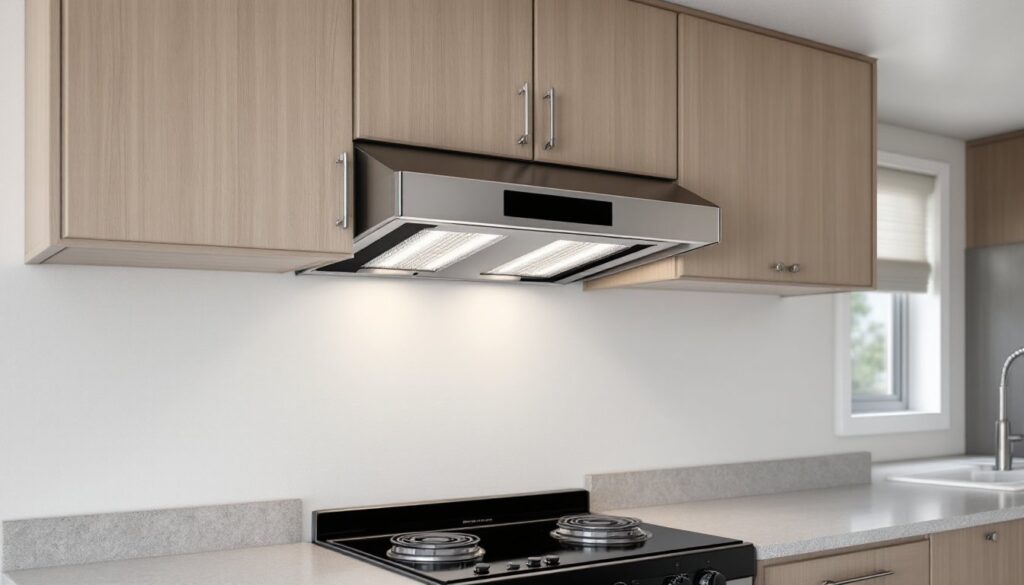
Mounting height and profile matter in low-clearance situations. Under-cabinet range hoods work well if there’s existing cabinetry above the cooktop. Wall-mounted chimney hoods provide a streamlined look but require more vertical clearance. Slim-profile models (6 to 10 inches deep) help maintain headroom while still capturing smoke and grease.
Noise levels are measured in sones. In the confined space of a mobile home kitchen, a loud range hood becomes disruptive quickly. Look for models rated at 4 sones or lower at maximum speed. Many quality hoods operate at 1.5 to 2.5 sones on lower settings, which is roughly equivalent to a quiet conversation.
Lighting is non-negotiable. Integrated LED lights illuminate the cooktop and last significantly longer than incandescent bulbs. Some models include multi-level dimming, which is useful for task lighting beyond cooking times.
Filter type determines maintenance frequency. Aluminum mesh filters are dishwasher-safe and reusable. Baffle filters (often stainless steel) provide better grease capture and quieter operation because they redirect airflow more efficiently. Avoid hoods with disposable charcoal filters unless using ductless mode.
Ducted vs. Ductless Options
Ducted range hoods vent air outside through ductwork, removing heat, moisture, smoke, and cooking odors completely from the home. This is the most effective ventilation method and the preferred option when possible. But, it requires either existing ductwork or the ability to install new ducts through the roof or exterior wall.
In mobile homes, duct runs should be as short and straight as possible. Each 90-degree elbow reduces airflow efficiency by roughly 25 feet of equivalent duct length. Use rigid metal ducting (galvanized steel or aluminum) rather than flexible duct, which creates more resistance and collects grease buildup. Standard duct sizes for range hoods are 6-inch or 7-inch diameter round, or rectangular equivalents.
Ductless (recirculating) range hoods pull air through filters and return it to the kitchen. They’re easier to install since they don’t require exterior venting, but they only filter particulates and odors, they don’t remove heat or moisture. Ductless models use a combination of aluminum grease filters and activated charcoal filters. The charcoal filters aren’t washable and need replacement every 3 to 6 months depending on cooking frequency, adding to long-term operating costs.
Ductless is a workable solution when adding ductwork isn’t feasible, but in humid climates or for homeowners who cook frequently with high heat, ducted ventilation prevents moisture damage and keeps the kitchen more comfortable. According to experts featured in product testing by Good Housekeeping, ducted models consistently outperform ductless versions in real-world cooking scenarios.
Top 42-Inch Range Hood Options for Mobile Homes
Under-cabinet models are the most common choice for mobile homes with existing upper cabinetry. These hoods mount directly to the bottom of the cabinet, sitting 18 to 24 inches above the cooktop. They typically range from 300 to 400 CFM and include basic controls and lighting. Look for models with a depth of at least 18 inches to provide adequate capture area over the front burners.
Broan and NuTone make reliable under-cabinet hoods in the 42-inch width that are lightweight enough for mobile home cabinetry without reinforcement. These generally weigh 25 to 35 pounds, which standard cabinet mounting can handle if installed into studs properly.
Wall-mounted chimney hoods offer a more modern aesthetic and higher CFM ratings, typically 400 to 600 CFM. The trade-off is installation complexity, they require solid mounting to wall studs and enough ceiling height to accommodate the chimney extension. In a 7-foot ceiling mobile home, chimney hoods can feel visually imposing, but they work well in kitchens with no upper cabinets.
Cosmo and Empava offer affordable stainless steel chimney hoods in 42-inch widths designed for residential use. These usually include touch controls, LED lighting, and both ducted and ductless operation. Weight ranges from 40 to 60 pounds, so installation requires locating studs and potentially adding blocking between studs for secure mounting.
Insert/liner hoods fit inside custom cabinetry or a decorative enclosure. These are less common in mobile homes but can be a good solution for homeowners building custom range surrounds. Inserts provide the ventilation components while allowing the exterior to match cabinetry. They’re typically more expensive and require more planning during installation.
For mobile home applications, prioritize hoods with convertible ducting (can operate ducted or ductless) to maintain flexibility if duct routing proves difficult during installation. Many quality 42-inch models in the $200 to $500 range offer this feature.
Installation Considerations for Mobile Home Range Hoods
Always check local codes before starting. Some jurisdictions require permits for range hood installation, especially if adding new ductwork or making envelope penetrations. HUD Code governs mobile home construction, but local amendments may add requirements.
Electrical requirements: Most range hoods operate on standard 120V household current and draw 5 amps or less. They typically use a dedicated 15-amp circuit. If there’s no existing electrical outlet above the range location, hire a licensed electrician to add one, working inside mobile home walls requires understanding the specific wiring methods used in manufactured housing.
Mounting preparation: Locate wall studs using a stud finder. Mobile home walls typically have 2×3 or 2×4 studs on 16-inch centers. Mark stud locations clearly before measuring for hood placement. If the hood mounting holes don’t align with studs, install a 1×4 or 2×4 mounting board horizontally across multiple studs to distribute the load.
For under-cabinet installation, verify that the existing cabinet is securely fastened to the wall. If it shifts or feels loose, reinforce cabinet mounting before hanging the hood.
Ductwork installation: If running new ducts, the shortest path with the fewest bends provides the best performance. Roof penetrations are common in mobile homes, but they require proper flashing and sealing to prevent leaks. Use a roof cap or wall cap rated for range hood use, these include backdraft dampers to prevent outside air from entering when the hood isn’t running.
Seal all duct joints with foil tape (not cloth duct tape, which degrades). Secure ducts with sheet metal screws at connections. Insulate ductwork if it runs through unconditioned space to prevent condensation.
Safety note: Wear safety glasses when drilling overhead. Use hearing protection if drilling through metal siding. If cutting a roof or wall penetration, double-check for electrical wiring, plumbing, or gas lines before cutting. When in doubt, this is the time to call a professional, improper penetrations can cause serious water damage or void mobile home warranties.
If the installation requires structural modifications or you’re uncomfortable working with electrical or ductwork, hiring a professional is worth the cost. Resources like Bob Vila’s contractor guides can help identify qualified local installers familiar with mobile home construction.
Maintenance Tips to Keep Your Range Hood Running Efficiently
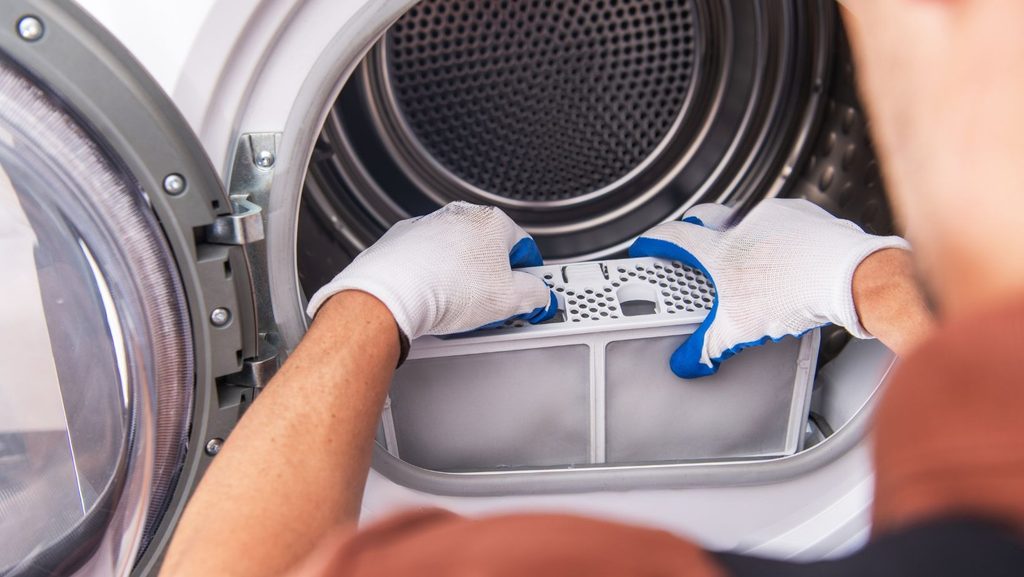
Grease filter cleaning is the most important maintenance task. Aluminum mesh and baffle filters should be cleaned every month with heavy cooking, or every 2 to 3 months with moderate use. Remove filters and soak them in hot water with degreasing dish soap for 10 to 15 minutes, then scrub with a soft brush. Most are dishwasher-safe, place them on the top rack and run a normal cycle.
Skipping filter cleaning reduces airflow and creates a fire hazard. Built-up grease is flammable, and in the rare event of a cooktop fire, a clogged filter can allow flames to reach ductwork.
Charcoal filter replacement (ductless models only): These can’t be cleaned and must be replaced according to manufacturer specifications. Most last 3 to 6 months. Set a reminder on your phone rather than waiting until you notice odors, by then, the filter is already saturated and ineffective.
Exterior cleaning: Wipe down the hood surface weekly with a damp microfiber cloth and mild all-purpose cleaner. Stainless steel benefits from specialized stainless cleaner applied in the direction of the grain to prevent streaking. Avoid abrasive scrubbers that can scratch surfaces.
Fan and motor inspection: Once or twice a year, turn off power at the breaker and remove the filters to inspect the fan blades and interior surfaces. Wipe away any grease buildup on the blades using degreaser and a cloth. Excessive buildup on the motor housing can cause overheating and premature failure.
Ductwork inspection (ducted models): Every few years, inspect accessible ductwork for grease accumulation. Professional duct cleaning services can clean the entire run if buildup becomes significant. Well-maintained filters drastically reduce how much grease reaches the ductwork.
Light bulb replacement: LED bulbs last 25,000 hours or more, but when they do burn out, replace them with the correct type specified in the owner’s manual. Using the wrong bulb can cause overheating or poor performance.
Regular maintenance extends the hood’s lifespan from 10 to 15+ years and ensures it continues to protect your mobile home from moisture and grease damage. According to maintenance best practices outlined by The Spruce’s home care experts, consistent upkeep prevents most common range hood failures.
Conclusion
A properly selected and installed 42-inch range hood protects a mobile home kitchen from grease buildup, excess moisture, and cooking odors while working within the constraints of manufactured home construction. Prioritize appropriate CFM for the space, choose ducted ventilation when possible, and ensure secure mounting that accounts for mobile home framing and cabinetry. With routine filter cleaning and basic upkeep, a quality range hood provides reliable ventilation for years to come.