
Black and green might seem like an unexpected pairing for a bedroom, but this color combination delivers serious visual impact when done right. The contrast between deep, grounding black and fresh, natural green creates a space that feels both dramatic and calming, two qualities that don’t often coexist. Whether someone’s working with a complete bedroom overhaul or just refreshing tired walls and linens, this palette offers flexibility across design styles from modern minimalist to maximalist botanicals. The key is balancing the darkness of black with the right shade and amount of green to avoid a space that feels heavy or overwhelming.
Table of Contents
ToggleKey Takeaways
- Black and green bedroom ideas combine a neutral anchor with nature-inspired calm, creating a space that feels both dramatic and relaxing when colors are balanced properly.
- Choose softer blacks (charcoal, graphite) for larger surfaces and richer greens (emerald, forest) for visual impact, testing paint samples on walls with different light exposure for 24 hours before final decisions.
- Implement a 60-30-10 color rule: use green as the dominant color on walls and large textiles (60%), black for furniture and window treatments (30%), and light accents like white or brass (10%) to prevent the space from feeling overwhelming.
- Add multiple lighting layers including dimmable ambient overhead lights (2700K-3000K warm white), task lighting at the bedside, and accent lights behind the headboard to counteract how dark colors absorb light.
- Layer at least three different textures such as velvet, linen, and natural fiber rugs to prevent a flat appearance, and incorporate brass or gold metallic accents to add warmth and prevent the room from feeling too moody.
Why Black and Green Work Together in Bedroom Design
The black-and-green combo taps into color theory basics that interior designers rely on. Black acts as a neutral anchor, it’s not technically a color but the absence of light, which means it pairs with nearly anything without clashing. Green, especially in its mid-to-deep tones, brings nature indoors and has been shown to promote relaxation and reduce eye strain.
This pairing works because of contrast and balance. Black provides weight and sophistication, while green introduces life and energy. In a bedroom, a space meant for rest, the green softens black’s intensity without diluting its drama. Think of black as the frame and green as the subject in a photograph.
Another practical advantage: both colors hide wear and minor imperfections better than lighter shades. Walls painted in deep hunter green or charcoal black don’t show scuffs as readily as white or beige, which matters in high-use spaces. For renters or DIYers on a budget, this means less frequent touch-ups and repaints.
Choosing the Right Shades of Black and Green
Not all greens and blacks are created equal, and the wrong combination can make a bedroom feel like a cave or a hospital waiting room.
Black options:
- True black (like Benjamin Moore’s Black or Sherwin-Williams Tricorn Black): Use sparingly, on one accent wall, trim, or furniture. Full-room application requires excellent natural light.
- Soft black (charcoal, graphite): These have gray undertones and feel less harsh. They work well for larger surface areas like all four walls or cabinetry.
- Black with warm undertones (like Farrow & Ball’s Railings): Adds depth without the starkness of pure black.
Green options:
- Sage and mint: Light, airy greens that pair well with soft blacks or charcoals. Best for smaller bedrooms or spaces with limited natural light.
- Emerald and forest green: Rich, saturated tones that hold their own against true black. These work in larger bedrooms and create a jewel-box effect.
- Olive and moss: Earthy, muted greens with gray or brown undertones. They feel organic and pair beautifully with warm blacks.
Test paint samples on at least two walls, one that gets morning light and one that doesn’t. Colors shift dramatically depending on light exposure. Most paint retailers sell 8 oz sample jars for around $3-$5, which covers about 16 square feet. Let samples dry for 24 hours before judging: wet paint always looks darker.
For a 60-30-10 rule approach, use green as the dominant color (60% of the room, walls, large textiles), black as secondary (30%, furniture, window treatments), and a lighter accent like white, brass, or natural wood for the remaining 10%.
Bold Statement Walls: Black and Green Accent Ideas
An accent wall is the fastest way to commit to this palette without overwhelming the space. Here are proven approaches:
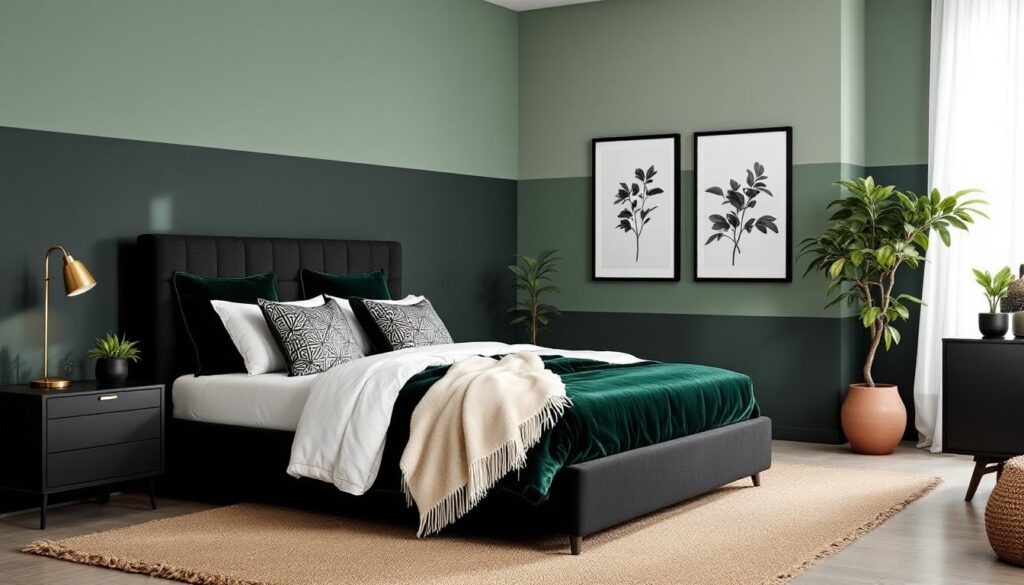
Vertical color blocking: Paint the bottom half of a wall in black (up to about 36-48 inches, roughly chair rail height) and the top half in green. This grounds the room visually and makes standard 8-foot ceilings feel taller. Use painter’s tape and a level to get a crisp horizontal line, any waviness will be obvious.
Geometric patterns: Use both colors to create triangles, chevrons, or hexagons on one wall. This requires careful planning and taping, but the payoff is significant. Mark guidelines with a chalk line (available for under $10 at any hardware store) before taping. Allow the base coat to dry fully, 24 hours minimum, before taping over it to avoid peeling.
Wallpaper with black and green motifs: Botanical prints, abstract designs, or even dark florals can deliver the color combo without paint. Peel-and-stick options from companies like Spoonflower or Tempaper run $30-$50 per roll (typically covering 28-30 square feet) and are renter-friendly. Traditional paste wallpaper offers more durability but requires more skill to install, consider hiring a pro if the room has tricky corners or textured walls.
Black shiplap or board-and-batten with green walls: Install black-painted shiplap (1×6 or 1×8 boards work well) on one wall, with the remaining walls in a complementary green. This adds architectural interest and texture. Nominal 1×6 boards are actually 3/4″ x 5.5″, so calculate carefully when planning spacing. Use a pneumatic brad nailer for faster installation, or predrill holes if hand-nailing to avoid splits.
Safety note: When painting, especially with darker colors that require multiple coats, ensure proper ventilation. Crack windows and use a box fan to circulate air. Wear a dust mask (N95 rated) if sanding between coats.
Furniture and Bedding Combinations for a Cohesive Look
Furniture anchors the color scheme and determines whether the room feels intentional or haphazard.
Bed frames and headboards:
- Black metal frames (iron, steel): Create an industrial or modern vibe. They’re lightweight, affordable ($150-$400 for a queen), and don’t visually crowd smaller rooms.
- Black wood or painted wood: Offers a more traditional or mid-century modern look. Solid wood (oak, maple) painted black can be refinished later if tastes change.
- Upholstered headboards in green velvet or linen: This is where green can really shine. Deep emerald velvet adds luxury: linen in sage or moss feels relaxed and coastal.
Dressers and nightstands:
Matching isn’t mandatory, but materials should complement each other. A black lacquered dresser pairs well with a natural wood nightstand painted in matte black, for example. Mixing finishes, glossy and matte, metal and wood, adds depth.
Bedding strategies:
- Layered approach: Start with white or cream sheets (they’re easier to bleach and replace), add a green duvet or coverlet, then layer with black throw pillows and a chunky knit blanket in charcoal.
- Pattern mixing: Combine a green geometric duvet with black-and-white striped euro shams. Patterns work when they share at least one color.
- All-black bedding with green accents: Sleek and hotel-like. Add green through a lumbar pillow, bench cushion, or folded throw at the foot of the bed.
Interior designers often recommend choosing furniture that balances visual weight, especially when working with dark colors that can make pieces appear heavier than they are.
Adding Texture and Patterns to Your Black and Green Bedroom
Flat color alone can feel one-dimensional. Texture and pattern create visual interest and prevent the space from reading as too stark or themed.
Textiles to layer in:
- Velvet: Green velvet curtains or a black velvet bench add richness. Velvet reflects light differently than matte fabrics, so it shifts throughout the day.
- Linen and cotton: Softer, more casual. A linen duvet in sage green balances heavier black furniture.
- Faux fur or sheepskin: A white or cream faux fur throw breaks up the dark palette and adds warmth.
- Jute or sisal rugs: Natural fiber rugs in tan or cream ground the room and add organic texture that complements green.
Pattern options:
- Botanical prints: Monstera leaves, ferns, or palm fronds in black-and-green color schemes reinforce the natural theme without going full jungle.
- Stripes: Vertical stripes in varying widths can make walls appear taller. Horizontal stripes widen a narrow room.
- Abstract or watercolor designs: These feel less literal and work well in modern spaces.
Many room design guides emphasize mixing at least three different textures in a single space to avoid a flat, showroom look.
Tip on pattern scale: In a small bedroom (under 120 square feet), stick to small- to medium-scale patterns. Large-scale prints can overwhelm compact spaces. In larger bedrooms (150+ square feet), larger patterns create impact without feeling busy.
Lighting and Accessories to Complete the Design
Dark colors absorb light, so a black-and-green bedroom needs a solid lighting plan to avoid feeling like a den.
Layered lighting approach:
- Ambient lighting: Overhead fixtures (flush mounts, chandeliers, or ceiling fans with integrated lights). Choose fixtures with a dimmer to adjust mood. LED bulbs in the 2700K-3000K range (warm white) prevent the room from feeling cold.
- Task lighting: Bedside lamps or wall-mounted sconces for reading. Swing-arm sconces save nightstand space and direct light exactly where it’s needed.
- Accent lighting: LED strip lights behind a headboard, under floating shelves, or inside a bookcase add depth. Battery-operated puck lights work for renters.
Light fixture finishes that work:
- Brass or gold: Warm metals pop against both black and green. They add a touch of glam without feeling over-the-top.
- Matte black: Blends with the palette but choose designs with interesting shapes so they don’t disappear.
- Natural wood or rattan: Pendant lights in woven materials or light wood soften the drama.
Accessories and finishing touches:
- Mirrors: A large mirror (at least 30″ x 40″) opposite a window reflects natural light and makes the room feel larger. Frame it in black, brass, or natural wood.
- Artwork: Black-and-white photography, abstract green paintings, or framed botanical prints tie into the palette. Avoid overly matchy-matchy art that looks staged.
- Live plants: Pothos, snake plants, or fiddle-leaf figs bring actual green into the space and improve air quality. Use black or terracotta pots.
- Metallic accents: Brass drawer pulls, a gold-framed mirror, or copper planters add warmth and prevent the room from feeling too moody.
Current interior design trends favor mixing metal finishes rather than matching everything, which creates a more collected, less cookie-cutter feel.
Window treatments: For privacy and light control, consider blackout-lined curtains in deep green or layered sheers in white with black rod hardware. Curtain rods should extend 4-6 inches beyond the window frame on each side to maximize light when curtains are open. Mount rods closer to the ceiling than to the window frame to create the illusion of taller windows.
Conclusion
A black-and-green bedroom isn’t for everyone, but for those willing to commit to a bolder palette, the results can be striking and deeply personal. The combination offers enough contrast to feel dynamic while maintaining the calm a bedroom requires. Start with one element, an accent wall, a green velvet headboard, or black furniture, and build from there. Test paint samples, layer textures, and don’t skip the lighting plan. With careful planning and attention to balance, this color duo transforms a generic bedroom into a space with real character.